


Causes, Symptoms, and Prevention
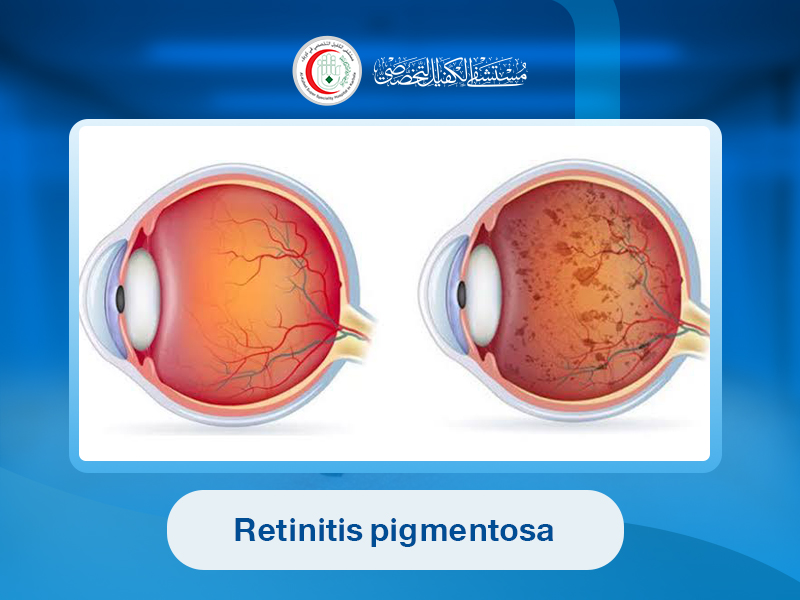
Retinitis Pigmentosa (RP) is a rare genetic disorder that affects the retina, leading to progressive vision loss. It was first described over 100 years ago, when pigmented spots were observed in the retina during an eye examination.
In the 20th century, researchers discovered that RP is not an inflammatory condition, but rather a genetic disease caused by mutations in specific genes. It is the leading inherited cause of blindness as it progresses with age.
Prevalence of Retinitis Pigmentosa
RP is a rare condition, affecting approximately 1 in 2,700 people in the United States.
How Retinitis Pigmentosa Affects Vision
The retina contains two types of light-sensitive cells:
Rod cells → Located in the outer part of the retina, responsible for night vision and peripheral vision.
Cone cells → Found in the central retina, responsible for color vision and fine details.
Most forms of RP affect rod cells first, leading to night blindness and loss of peripheral vision. As the disease progresses, cone cells are also affected, causing loss of central vision and color perception.
Symptoms of Retinitis Pigmentosa
Symptoms usually begin in early childhood and progress over time. The main signs include:
Night blindness → Difficulty seeing in low light.
Gradual loss of peripheral vision → "Tunnel vision."
Loss of central vision → Difficulty recognizing faces, reading, and seeing fine details.
Causes and Genetic Factors
RP is caused by mutations in more than 60 known genes and can be inherited in different ways:
Autosomal recessive → Both parents must carry the gene for the child to inherit the disease.
Autosomal dominant → A single mutated gene from one parent can cause the disease.
X-linked inheritance → The faulty gene is carried on the X chromosome, mainly affecting males. Fathers do not pass this form to their sons.
Prevention and Genetic Counseling
Since RP is a genetic disease, there is no way to prevent it. However, genetic counseling and testing can help identify whether a child is at risk of developing the disease.