

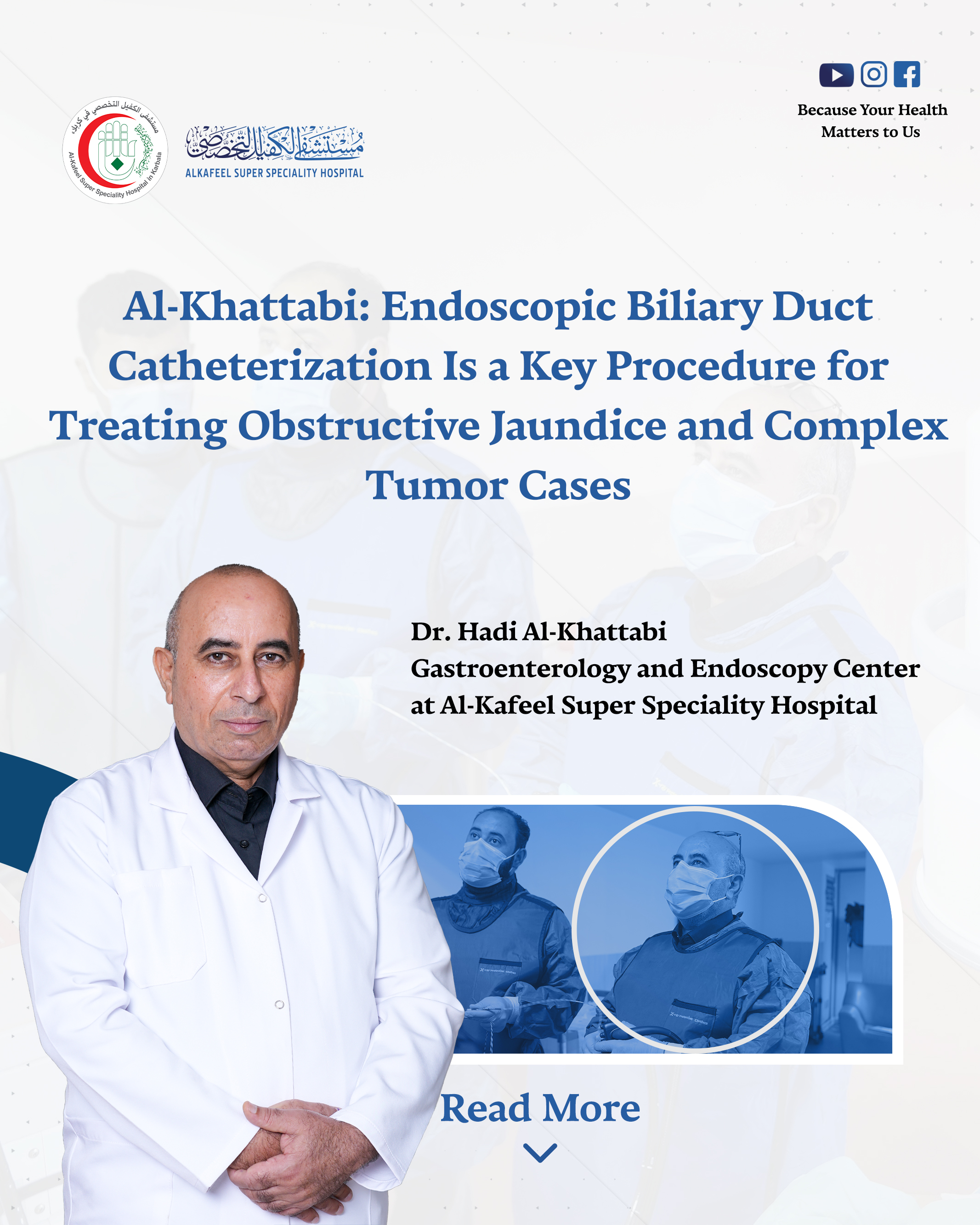
Dr. Hadi Al-Khattabi, a gastroenterology and endoscopy specialist at Al-Kafeel Super Specialty Hospital, highlighted the availability of advanced techniques for biliary catheterization, which have become a potentially life-saving and definitive intervention for patients suffering from obstructive jaundice, particularly when caused by advanced or metastatic malignancies.
Dr. Al-Khattabi explained that obstructive jaundice occurs as a result of a mechanical blockage in the flow of bile. This is commonly caused by tumors involving the main bile duct or the pancreas, which may sometimes extend to the liver. He noted that catheter-based intervention aims to relieve the obstruction and drain accumulated bile, helping patients overcome the critical stage of the condition and restore vital liver functions.
He added that the procedure is performed using specialized, highly precise endoscopic techniques. The narrowed areas are dilated, and plastic or metallic stents are placed within the bile duct. These stents not only relieve the immediate symptoms but also represent an important strategic step in preparing the patient for further treatment, whether by initiating chemotherapy or preparing for major surgery to resect the tumor.
Dr. Al-Khattabi further explained that the applications of biliary duct catheterization at the hospital are not limited to malignant conditions. They also include a wide range of therapeutic interventions, such as treating strictures resulting from complications following gallbladder removal, extracting stones lodged within the bile duct, managing pancreatic duct disorders and strictures, and treating congenital pancreatic duct abnormalities.
In conclusion, the gastroenterology specialist stated that the duration of these procedures varies depending on the complexity of the case, the type of tumor, and the extent of its spread. Procedures may take as little as 10 minutes or more than one hour in particularly complex cases. He emphasized that the accumulated medical expertise in this field has contributed to higher success rates and reduced risks to patients’ lives.