

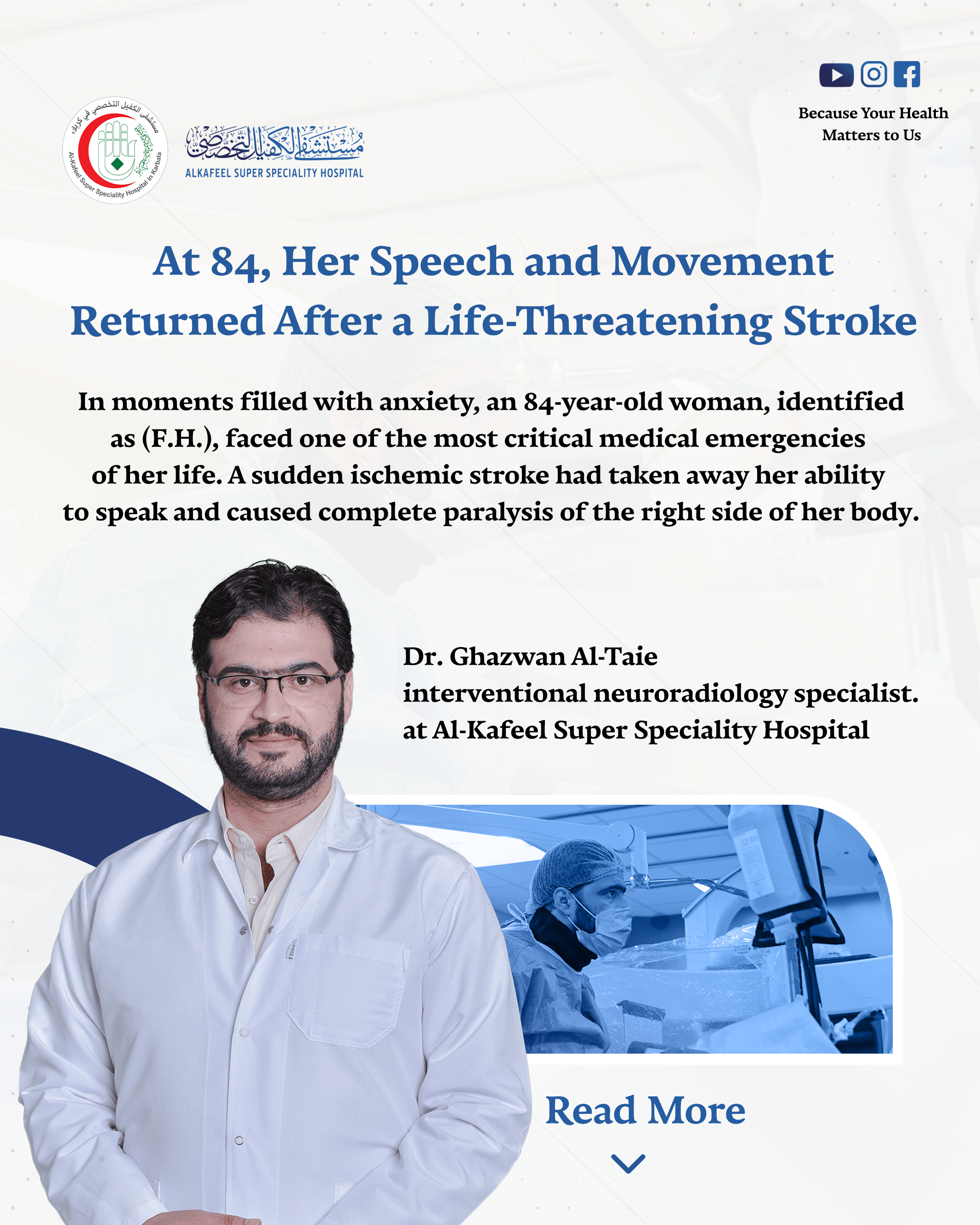
In moments filled with anxiety, an 84-year-old woman, identified as (F.H.), faced one of the most critical medical emergencies of her life. A sudden ischemic stroke had taken away her ability to speak and caused complete paralysis of the right side of her body.
Dr. Ghazwan Al-Taie, a specialist in cerebral catheterization, explained that the patient arrived at Al-Kafeel Super Specialty Hospital in Karbala only three hours after the onset of the stroke.
He noted that every minute was critical. The patient’s advanced age and the markedly tortuous arteries leading to the brain made the intervention particularly challenging. Nevertheless, the medical team’s primary objective was to remove the blood clot and restore blood flow to the affected brain tissue before irreversible damage occurred.
With a high degree of skill and precision, the team successfully navigated the tortuous blood vessels and reached the left middle cerebral artery (MCA). The clot was then successfully retrieved, relieving the arterial blockage and restoring normal circulation.
Shortly after the procedure, the patient regained her ability to speak clearly, and movement gradually returned to her previously paralyzed limbs, bringing great relief and joy to both her family and the medical team.
Dr. Al-Taie emphasized that a stroke does not necessarily mean the end of recovery, stressing that time is one of the most critical factors. In this case, the patient’s arrival within the first few hours after symptom onset played a decisive role in the successful outcome.