

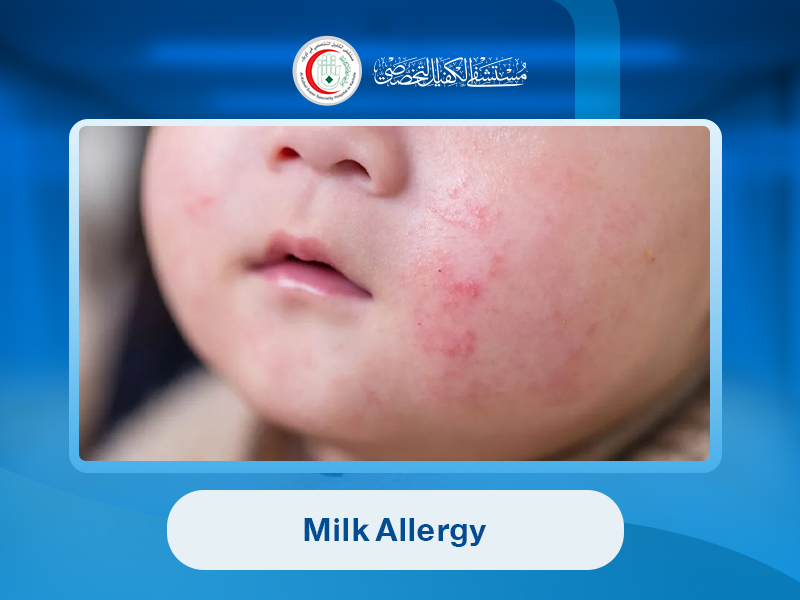
Milk allergy is one of the most common food allergies. When we talk about milk allergy, we usually mean an allergy to cow’s milk, although milk from other sources can also cause allergic reactions. As is well known, cow’s milk causes problems for many people, including those who do not actually have a true milk allergy.
This type of milk allergy particularly affects infants and young children. It is estimated that about 2% of all children suffer from milk allergy.
In more than 70% of cases, this allergy disappears naturally with age. The ability to tolerate milk usually begins to develop between the ages of one and three years, although it may occur later in some cases.
A delayed milk allergy is often referred to as milk intolerance or Type II milk allergy. This condition also affects infants and children and usually disappears on its own in more than 90% of cases by the age of one year. In these cases, the reaction to the trigger may occur up to 48 hours after exposure to cow’s milk.
Another condition that is often confused with milk allergy is lactose intolerance, which is an inability to digest lactose, the sugar found in milk. It is characterized by gas buildup and abdominal pain. This condition becomes more common and often worsens with age.
Symptoms of Milk Allergy
Not all children experience the same symptoms, and the severity varies from person to person depending on the degree of sensitivity and the amount of milk consumed. Allergic reactions occur after exposure to the allergen.
The reaction usually develops within minutes, not days. The first symptoms may include a tingling or stinging sensation inside the mouth. In infants, it may appear as spitting up milk or refusing to drink it. Common symptoms include:
- Skin rash.
- Shortness of breath.
- Sneezing.
- Vomiting.
- Abdominal pain.
- Diarrhea.
- Loss of consciousness in some severe cases.
In Type II milk allergy, the symptoms are usually limited to vomiting and diarrhea, without shortness of breath, skin rash, or fatigue. These cases generally do not carry a risk of death.
Causes and Risk Factors of Milk Allergy
All true food allergies result from a malfunction of the immune system. If you have a milk allergy, your immune system mistakenly identifies certain milk proteins as harmful. As a result, it produces immunoglobulin antibodies to neutralize the protein that triggered the allergy.
The next time you come into contact with these proteins, the antibodies recognize them and signal your immune system to release histamine and other chemicals, causing a range of allergic signs and symptoms.
There are two main proteins in cow’s milk that can trigger allergic reactions:
- Casein: Found in the solid part of milk (curds) that forms when milk coagulates.
- Whey: Found in the liquid portion of milk that remains after coagulation.
Complications of Milk Allergy
Children with milk allergy are more likely to develop other health problems, including:
- Allergies to other foods, such as eggs, soy, peanuts, or even beef.
- Hay fever, which is a common reaction to pet dander, dust mites, pollen, and other substances.
Diagnosis of Milk Allergy
Milk allergy can be diagnosed through:
- Physical examination: Diagnosis is based on the symptoms that appear.
- Skin prick test: Considered one of the best tests due to its accuracy, low cost, and rapid results.
- Blood test: Measures the immunoglobulin antibodies associated with milk allergy.
In rare and special cases where there is uncertainty about the diagnosis, a challenge test may be performed by giving small amounts of milk and monitoring the person's reaction.
Most infants with cow’s milk allergy are also allergic to goat’s milk and sheep’s milk. Therefore, many people with this allergy consume plant-based milk alternatives.
In infants with Type II milk allergy, both the skin test and the blood test are usually negative.
Treatment of Milk Allergy
The only way to prevent allergic reactions is to avoid milk and milk proteins. This can be difficult because milk is a common ingredient in many foods. However, some people with milk allergy can tolerate milk in certain forms, such as milk that has been heated in baked products or processed foods like yogurt.
If you or your child accidentally consume milk, medications such as antihistamines may help reduce mild allergic reactions. However, if a severe allergic reaction occurs, an emergency injection of epinephrine may be required, followed by immediate medical attention in an emergency department.
Prevention of Milk Allergy
There is no guaranteed way to prevent food allergies. However, allergic reactions can be prevented by avoiding the foods that trigger them. If you know that you or your child is allergic to milk, avoid milk and all dairy products.