


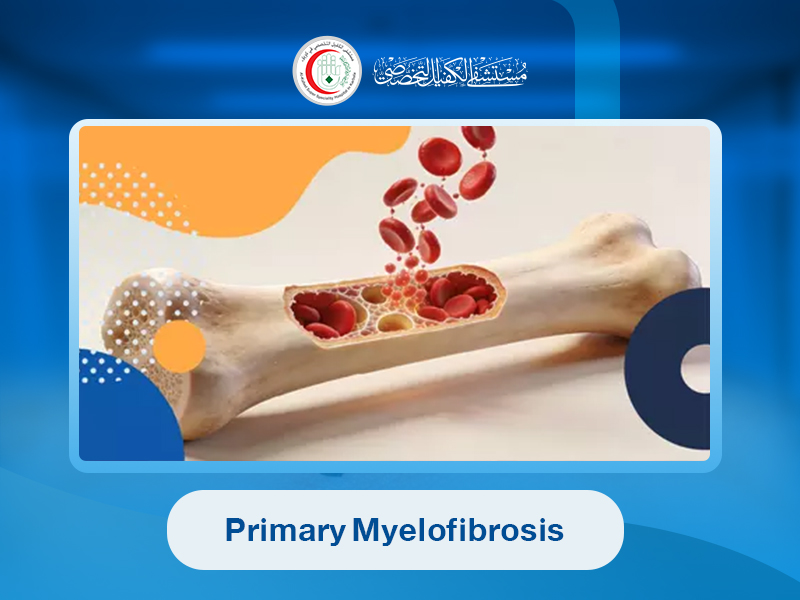
Primary myelofibrosis is a chronic myeloproliferative disease caused by an acquired malignant disorder in the stem cells that produce blood cells.
It is characterized by the activation of fibroblast cells, which produce connective tissue that forms bone marrow fibrosis. This happens due to abnormal stem cells, including megakaryocytes (cells that produce platelets), which release cytokines and growth factors.
As a reaction to bone marrow fibrosis, blood cells begin to be produced outside the bone marrow, especially in the liver, spleen, and lymph nodes.
The disease leads to excess fibrous tissue in the bone marrow, along with abnormal immature red and white blood cells with irregular shape and development appearing in the bloodstream.
Symptoms of Primary Myelofibrosis
In early stages, the disease may cause no symptoms. Symptoms develop as scar tissue increases in the bone marrow and it can no longer function properly.
1. Anemia symptoms
- Weakness
- Shortness of breath
- Fatigue
- Pale appearance
- Fast heart rate
2. Infection symptoms
- Fever above 38°C
- Chills
- Night sweats
- Cough
- Sore throat
- Rectal pain
- Mouth or lip sores
- Pain during urination
- Non-healing wounds (may be red, swollen, or warm)
- Stiff neck
3. Bleeding symptoms
- Easy bruising
- Heavy or prolonged bleeding
- Unexplained bleeding
- Severe headache or vision changes
- Joint pain
- Stiff neck
Causes and Risk Factors
1. Causes
Primary myelofibrosis occurs due to genetic mutations in bone marrow stem cells.
These stem cells normally produce red blood cells, white blood cells, and platelets. When mutations occur, abnormal cells multiply and spread, affecting normal blood production.
Over time:
- Red blood cells decrease → anemia
- White blood cells may increase or decrease
- Platelets may be abnormal
Bone marrow becomes scarred (fibrotic), reducing its function.
2. Risk factors
- Age over 50
- Other blood disorders (such as essential thrombocythemia or polycythemia vera)
- Exposure to chemicals such as benzene and toluene
- Exposure to high levels of radiation
Complications
1. Increased pressure in liver blood flow
An enlarged spleen increases blood flow to the liver, raising pressure in the portal vein. This can cause enlargement of veins in the stomach and esophagus, which may rupture and bleed.
2. Blood cell production outside the bone marrow
Blood-forming cells may grow in other organs, forming masses that can cause:
- Gastrointestinal bleeding
- Coughing or coughing blood
- Spinal cord compression
- Seizures
3. Bleeding problems
Low platelet counts and poor platelet function increase bleeding risk, especially during surgery.
4. Acute leukemia
Some patients may develop acute myeloid leukemia, a fast-growing cancer of blood and bone marrow.
Diagnosis
1. Physical examination
The doctor checks:
- Blood pressure and pulse
- Lymph nodes
- Spleen and abdomen
2. Blood tests
- Low red blood cells (anemia)
- Abnormal white blood cell count (high, normal, or low)
- Abnormal platelet count (high or low)
3. Imaging tests
- X-ray
- MRI
4. Bone marrow biopsy
A sample of bone marrow is taken (usually from the hip bone) to examine blood cell production and confirm fibrosis.
Treatment
1. Monitoring
Some patients only need regular follow-up and blood tests.
2. Blood transfusions
Used to treat anemia symptoms.
3. Hormonal therapy
Drugs that stimulate red blood cell production:
- Androgens (e.g., oxymetholone, fluoxymesterone)
- Sometimes corticosteroids (glucocorticoids)
4. Chemotherapy
Drugs such as hydroxyurea are used to slow blood cell production.
5. Surgery
Removal of the spleen (splenectomy) if it is severely enlarged and causes symptoms.
6. Radiation therapy
Used to shrink an enlarged spleen.
7. Biological therapy (immunotherapy)
Such as interferon alpha, which reduces high blood cell counts.
8. Other medications
- Allopurinol to prevent high uric acid levels and gout
Prevention / Supportive Care
There is no true prevention, but supportive measures include:
- Avoid infections (especially if white blood cells are low)
- Wash hands frequently
- Maintain good oral and personal hygiene
- Avoid injuries and bruising
- Use electric razors and be careful with sharp objects
- Wear protective clothing when outdoors
- Use a soft toothbrush if gums bleed
- Avoid aspirin and anti-inflammatory drugs unless prescribed
- Eat a balanced diet
- Get enough rest
- Do light exercise like walking
- Inform healthcare providers about the condition