

Allergy is the immune system’s reaction to unfamiliar substances, such as
pollen, venom from bee stings, or animal dander.
The immune system produces proteins called antibodies that protect the body
from unwanted foreign substances that may invade the body and cause diseases or
infection. When someone suffers from an allergy to a specific substance, their
immune system produces antibodies that identify the allergen and treat it as a
harmful element, even though it is not, which leads to the secretion of
histamine and other substances that cause allergy symptoms to appear.
Allergies can cause various symptoms that may appear on the skin, in the
sinuses, in the respiratory airways, or in the digestive system. The severity
of an allergy and its degree of danger vary from one person to another;
allergies can cause anaphylactic shock, an emergency that may result in death.
Allergies cannot be completely cured, but there are treatments that help relieve
allergy symptoms.
Symptoms of Allergy
Allergy symptoms vary depending on the allergy itself and from one person
to another, as they may appear in the respiratory airways, the sinuses and
nasal passages, the skin, or the digestive system.
In most cases, an allergic reaction is a source of annoyance and discomfort
with mild symptoms. However, reactions in severe allergies may be more
dangerous, as they can affect many organs and systems in the body. The
following are the most prominent types of allergies and their symptoms:
1. Allergic Rhinitis
Symptoms include the following:
• Nasal congestion and a runny nose
• Itching
• Watering or swelling of the eyes
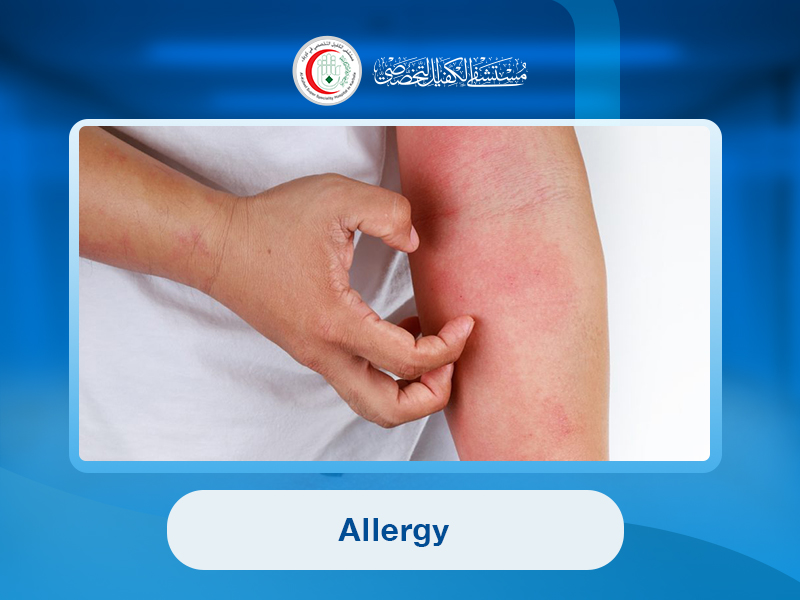
2. Atopic Dermatitis
Symptoms include the following:
• Itching of the skin
• Redness of the skin
• Flaking of the skin
3. Food Allergy
Symptoms
include the following:
• A tingling sensation in the mouth
• Swelling of the lips, tongue, face, or throat
• Hives
• Anaphylaxis
4. Insect Sting Allergy
Symptoms include:
• Swelling in a large area around the sting site
• Itching or hives all over the body
• Cough
• Tightness in the chest
• Shortness of breath
• Anaphylaxis
5. Drug Allergy
Symptoms include the following:
• Hives
• Itching
• Skin rash
• Swelling of the face
• Wheezing and rattling while breathing
• Anaphylaxis
6. Anaphylaxis
Some types of allergies, including food allergies and insect sting allergies, may cause a dangerous phenomenon known as anaphylaxis. This reaction may end in death and requires immediate medical treatment, as it affects many of the body’s organs and systems and may cause shock.
Signs and symptoms of anaphylaxis include the following:
• Loss of consciousness
• Dizziness
• Severe shortness of breath
• Rapid, weak pulse
• Skin rash
• Nausea and vomiting
• Swelling of the respiratory airways that may completely stop breathing
If an adrenaline auto-injector is available, it should be used immediately.
Even if symptoms improve after the injection, one should still go to the
emergency department to ensure the symptoms do not reappear once the
injection’s effect wears off.
Causes and Risk Factors of Allergy
The following is an explanation of the causes of allergies and the people most affected:
Causes of Allergy
Substances that cause allergies include the following:
• Pollen, animal dander, dust mites, and mold
• Certain foods, especially hazelnuts, walnuts, wheat, soybeans, fish,
shellfish, eggs, and milk
• Venom from insects such as bee or wasp stings
• Certain medications, especially penicillin or antibiotics derived from
penicillin
• Natural rubber (latex) or other materials that can provoke allergic
skin reactions on contact
People Most at Risk of Infection
The risk of developing an allergy increases in people who belong to one
of the following groups:
• Those with a family history of allergies or asthma, as the risk of
developing allergies increases among relatives of patients with asthma or
allergies, such as hay fever, hives, or eczema
• Children — although allergies can appear at any stage of life,
children are more susceptible than adults to developing allergies. In many
cases, however, allergies disappear and then return later in life
• Asthma patients, who have a greater likelihood of developing
allergies; people with one specific type of allergy are also more prone to
developing allergies to other substances
Complications of Allergy
Allergies increase the risk of other health problems, including the
following:
• Anaphylactic shock: People with severe allergic reactions are more
susceptible to anaphylactic shock, a reaction resulting from an allergy
• Other allergies: People with one type of allergy are more susceptible
to developing other types of allergies
• Asthma: People with asthma are more susceptible to developing
allergies
• Development of other conditions: Allergies can contribute to eczema,
sinusitis, or ear or lung infections
• Fungal infections: The risk of fungal infections, known as fungal
sinusitis, increases in people with allergies
Treatment of Allergy
Allergy treatment includes the following:
• Avoiding irritants
• Using medications to relieve symptoms
• Undergoing immunotherapy
• Using adrenaline in emergency cases
Prevention of Allergy
Prevention depends on the type of allergy. General guidelines for preventing allergies include the following recommendations:
1. Avoiding common allergens
Substances known to commonly cause allergies typically include specific foods, certain insects, and certain medications. Some allergy symptoms also appear or worsen due to extreme heat or psychological stress.
2. Wearing a medical alert bracelet
A medical alert bracelet should be worn by people who have previously experienced a severe and acute allergic reaction.