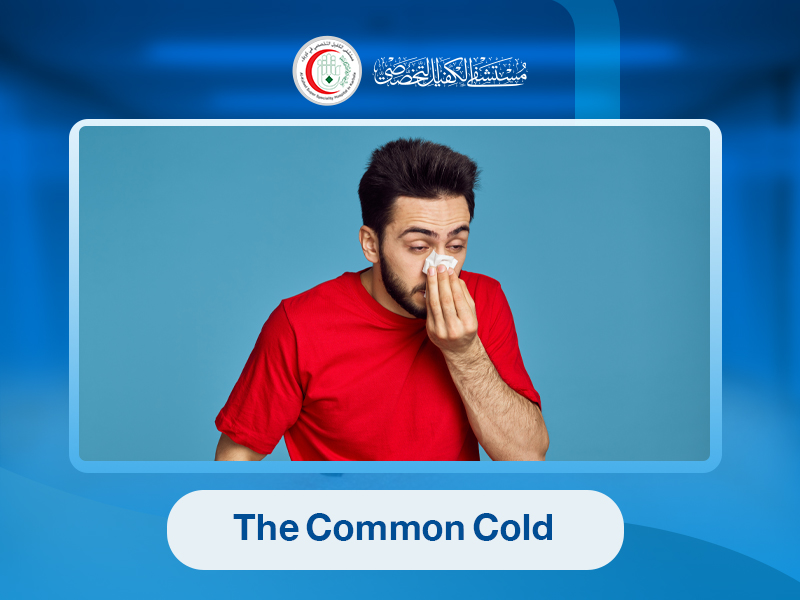
The common cold is a non-serious disease caused by several viruses. It affects the nose and throat and in most cases does not cause any harm, although it might seem otherwise, and viruses cause the cold.
Adults are mostly infected with colds once or twice a year, while infants and children may be infected with colds more frequently.
Most people recover from a cold within a period of 7 to 10 days; however, if the patient is a smoker, the symptoms may last longer. You will often not need medical care when infected with a cold, but if symptoms do not improve or if they worsen, consult a doctor.
Cold viruses are transmitted by direct contact or through droplets, and the direct transmission of the virus is considered the most effective mechanism for rhinoviruses.
The transmission of the virus from one person to another depends on the length of time the person spends next to the sick person and the amount of viruses present in the patient.
Transmission by contact is the primary method of transmitting the infection; the virus is transmitted in contaminated saliva secretions from the patient to another person via the hands and from there to the nose and eyes.
The virus can live for two hours on the skin and its presence has been shown in 40% - 90% of cold patients, and rhinoviruses are also transmitted by droplets.
Symptoms of the Common Cold
The incubation period of the virus, from the occurrence of the infection until the onset of noticeable cold symptoms, ranges between 24 - 72 hours.
Symptoms vary from one person to another and include:
• Runny nose and mucous congestion in the nose.
• Nasal blockage.
• Sneezing.
• Sore throat.
Mostly, the sore throat disappears quickly, while the runny nose and congestion remain the primary source of complaint for patients, especially on the second and third days from the onset of the disease. On the fourth and fifth days, the cough becomes the primary source of annoyance, while the severity of other symptoms lessens.
The cold usually lasts between 3 – 7 days, although it lasts for about two additional weeks in nearly a quarter of patients.
The cold may be more difficult and severe in children, in people with chronic diseases, in people suffering from a defect in the functioning of the immune system, and in those suffering from malnutrition.
Causes and Risk Factors of the Common Cold
There are many viruses that cause the common cold.
Viruses causing the common cold
The following viruses cause cold infections:
• Rhinoviruses: cause 10% - 40% of cold cases.
• Respiratory syncytial virus (RSV): this type of virus causes 20% of disease cases.
• Coronaviruses: Coronaviruses cause 10% of cold infection cases.
Viruses causing symptoms similar to the common cold
Some viruses cause symptoms similar to cold symptoms, but they are usually accompanied by pneumonia, or a more severe and dangerous disease, including:
• Influenza viruses.
• Adenoviruses.
• Parainfluenza.
Also, some viruses cause symptoms similar to cold symptoms, but they do not usually lead to the appearance of characteristic symptoms, and are accompanied by a high temperature only, including:
• Echovirus.
• Coxsackievirus.
Differentiating between types of viruses
It is difficult to identify and distinguish the causative virus based on symptoms alone, although parainfluenza infects children while the respiratory syncytial virus (RSV) causes a mild cold.
Most respiratory viruses causing the cold can lead to the recurrence and reappearance of the disease upon re-exposure to the virus, but the disease is less severe in this case.
Rhinoviruses and parainfluenza cause colds in the fall and at the end of spring, while adenoviruses, coronaviruses, and respiratory syncytial viruses cause the disease to appear in the winter and spring seasons; as for echoviruses and coxsackieviruses, they cause colds in the summer.
The respiratory syncytial virus is a highly contagious virus, and infection with this virus usually occurs through droplets, although the virus survives for about an hour at a temperature of 37 degrees Celsius.
In 90% of patients exhibiting symptoms, the virus is not found in the saliva, leading to the belief that the virus is not transmitted through kissing.
Risk factors for the common cold
Risk factors that increase the risk of catching a cold include:
• Infants.
• Winter season.
• Smoking.
• Weak immunity.
Complications of the Common Cold
Potential complications of catching a cold include:
Sinusitis
Sinusitis occurs due to bacteria, and it happens in 0.5% - 2.5% of adults after a cold. Computed tomography scans have shown that this inflammation appears in 39% of those infected with a cold after a week. Characteristic symptoms of the inflammation: purulent discharge, headache, and continuous fever.
Pneumonia
Primarily due to infection with the respiratory syncytial virus.
Exacerbation of asthma
About 40% of asthma attacks result from a cold.
Diagnosis of the Common Cold
Doctors can diagnose most cold patients based on symptoms, but if the doctor suspects a bacterial infection, they perform a chest X-ray to ensure there is no inflammation.
Treatment of the Common Cold
Treatment of the common cold generally aims to alleviate the signs and symptoms of the disease only.
Treatment for a cold includes the following medications:
• Antihistamines that can alleviate coughing and a runny nose.
• Medications to suppress coughing.
• Medications to relieve mucous congestion in the nose, which are often in the form of drops.
It has been shown in a number of studies that treating the cold with zinc tablets along with vitamin C, and with herbs, can be beneficial and effective in treating cold symptoms.
There is no need for treatment with antibiotics, as they have not proven effective in treating the common cold.
The effectiveness of antiviral treatment, whether combined with anti-inflammatory drugs or without them, has been proven in alleviating symptoms for the patient and even shortening the duration of the disease.
Prevention of the Common Cold
Methods of preventing the common cold include:
• Washing hands thoroughly with soap and water.
• Avoiding touching the face and eyes if hands are unwashed.
• Sterilizing surfaces periodically.
• Strengthening immunity through adequate sleep and playing sports.



-
Celebration of Imam Ali’s Birth Anniversary
Medical Units for Arbaeen Pilgrimage
Celebration of the Prophet Muhammad's (PBUH) Birth Anniversary
Celebration of Lady Zainab's (peace be upon her) Birth Anniversary
Bringing Joy to Patients on the Occasion of Imam Ali’s (peace be upon him) Birth Anniversary
Alkafeel Hospital Celebrates the Birth Anniversary of Imam Hussein (peace be upon him)
Joy Fills Alkafeel Hospital on the Birth Anniversary of Abu Al-Fadl Al-Abbas (peace be upon him)
Al-Kafeel Hospital participates in Arbaeen pilgrimage
-
Job Fair Participation at Al-Kafeel University
First Al-Kafeel Symposium on Musculoskeletal and Spine Surgery
IT Forum in Dhi Qar
University of Al-Kafeel Scientific Conference
Baghdad International Fair
Alkafeel Hospital Participates in the Sixth International Medical Sciences Conference at Al-Kafeel University
Alkafeel Hospital Participates in Iraq’s First Medical Tourism Conference, Affirming Its Pioneering Role in Health Sector Development
-
Training Lecture on Hospital Hospitality Services
Civil Defense Training Program
Training Program for Sama Karbala Foundation Staff
Workshop for Administrative Development Academy Trainees
Training for Turkish Hospital Medical Staff
Cervical Cancer screening Workshop
Scientific workshop for anesthesia students
Nursing Workshop for Dhi-Qar Province
Workshop on Quality and International Accreditation Standards
Hand Hygiene Training Workshop
Laboratory Training for Sama Karbala Foundation Staff
Wound Care Training for University Students
Scientific Workshop on General Surgery
Scientific Lecture on European Society of Cardiology Guidelines
Surgical Suturing Workshop for Medical Students
Accounting System Workshop for Administrative Development Academy Students
Risk Management Training
Training on Electrocardiography and Cardiac Arrhythmia Management
Proper Handwashing Techniques Workshop
Educational Lecture on Benign Prostatic Hyperplasia
Interactive Lecture for Medical Students of Al-Ameed University
Training on Cardiopulmonary Resuscitation for Dental Students
Security Staff Training on Explosives Detection Device “ID”
Delegation of Biomedical Engineering Students from Al-Safwa University
Human Resources Workshop for Hospital Departments
Radiation Protection Training Course
Quality of Medical Services Presentation
Fire Safety Training Workshop
Scientific Workshop on "Patient Safety"
Research Development Initiatives
Medical Training Workshop for University Students
Accounting Department Workshop
First Aid Training Workshop
Awareness Lecture on Early Breast Cancer Detection for Al-Siddiqa Al-Tahira Center
Training Program for Karbala Health Directorate Staff
Crisis Management and Fire Safety Training for Staff
Emergency Nursing Response Workshop
Students of the Administrative Development Academy Meet to Discuss the "Healthy Hospital" Project at Alkafeel Hospital
Successful Workshop on Workplace Etiquette Held at Alkafeel Hospital
Alkafeel Hospital Enhances Patient Satisfaction Through Specialized Training Course
Alkafeel Hospital Organizes Training Workshop to Enhance Anesthesiologists' Competency
Successful Breast Cancer Awareness Lecture at Alkafeel Hospital
Successful Workshop on PET Scan Technology Held at Alkafeel Hospital
Alkafeel Hospital Enhances Pharmacy Students’ Practical Skills
Alkafeel Hospital Emphasizes the Importance of Early Detection of Breast Cancer
Director of Alkafeel Hospital Discusses Development Strategies with General Surgery Team
Alkafeel Hospital Administration Strengthens Collaboration with Neurosurgery Team
Parliamentary Committee Commends Services at Alkafeel Hospital
Successful Workshop on Safety Practices Concludes at Alkafeel Hospital
Alkafeel Hospital Hosts Specialized Workshop on “Rezūm” Technology for Treating Benign Prostatic Hyperplasia
Alkafeel Hospital Enhances Efficiency of Its Human Resources Department
Organizational Meeting to Clarify the 2025 Postgraduate Application Process
Al-Kafeel Hospital Trains Its Staff on Safety and Evacuation Procedures
Sheikh Salah Al-Karbalai Delivers Religious Lecture to Alkafeel Staff
Alkafeel Training Center Concludes a Successful Scientific Day in Dentistry
Civil Defense Training at Alkafeel Hospital
English Debate at the Nursing Department
Meeting between Al-Kafeel Hospital and Al-Zaki Hospital in Babylon
Al-Kafeel Hospital participates in a workshop on Mass-Care Nursing
-
Spinal Surgery Patient Referrals
Spanish University Delegation Visit
Visit by Iraqi Ministry of Interior Delegation
Collaboration with Anwar Sheikha Hospital
Visit by College of Medicine, University of Diyala
Visit by Iraqi Ministry of Health Delegation
Shiraz University Delegation Visit
Visit by Faculty of Science – University of Karbala
Treatment of Pediatric Cardiac Patients
Memorandum of Understanding with Aster Medical Group
Delegation from Shahid Rajaei Hospital, Iran
Dr. Jassim Al-Ibrahimi Meets with Ministry of Health Referral Committee
Delegation of Medical Devices Students from Al-Mustaqbal University
Delegation of Medical Physics Students from University of Karbala
Student Delegation from Warith University
Meeting Between Dr. Jassim Al-Ibrahimi (CEO) and Department Heads
Visit by Croatian Academic Delegation
Meeting Between Al-Kafeel and Al-Battat Hospitals
Visit by Ministry of Health Delegation
Admission of Spinal Surgery Patients
Pediatric Cardiac Surgery Referrals
Meeting with Medical Students – Al-Ameed University
Collaboration with Karbala Nursing Syndicate
Visit by Al-Nahrain University Students
Dr. Jassim Al-Ibrahimi (CEO) Meets Top English Language Graduates
Visit by Al-Mustaqbal University Students
Alkafeel Hospital Holds Meeting with Dr. Moataz, Specialist in Internal Medicine
Alkafeel Hospital and Ministry of Water Resources Collaborate to Promote Public Health
High-Level Georgian Delegation Visits Alkafeel Hospital
French Delegation Visits Alkafeel Hospital: Toward Advanced Medical Collaboration
"A Leading Partnership to Support the Future of Engineers": Alkafeel Hospital Signs Cooperation Agreement with the College of Engineering at the University of Karbala
Alkafeel Hospital Provides Medical Care to the Blind Football Federation Players
High-Level Swiss Delegation Visits Alkafeel Hospital
Al-Nahrain University and Alkafeel Hospital Discuss Prospects for Joint Cooperation
President of the University of Babylon Explores Alkafeel Hospital’s Services and Discusses Future Cooperation
Alkafeel Hospital Commends the Civil Defense Directorate for Their Support
High-Level Georgian Delegation Visits Alkafeel Hospital
Academic Collaboration Between the University of Karbala and Alkafeel Hospital
Prospective Academic Cooperation Between the University of Karbala and Alkafeel Hospital
Ministry of Health Delegation Praises Dental Center at Alkafeel Hospital
Ongoing Collaboration Between Alkafeel Hospital and the Ministry of Health in Corneal Transplantation
Alkafeel Hospital Receives a New Group of Spinal Deformity Patients
Academic Delegation Praises Alkafeel Hospital
Expanding Health Insurance Coverage: Discussions Between the Al-Abbas Shrine and the Ministry of Health
Delegation from the Imamia Medics International Visits Alkafeel Hospital
Productive Academic Collaboration Between Al-Kafeel Hospital and the University of Babylon
College of Tourism at Al-Mustansiriya University: Al-Kafeel Hospital Sets a Distinguished Standard in Hospitality Services
Al-Kafeel Hospital Hosts Medical Delegation from Al-Muthanna Hospital
Citizens: Alkafeel is a Pioneer in Pediatric Cardiac Surgery and an Alternative to Medical Travel Abroad
Alkafeel Hospital Opens New Avenues of Collaboration with Maysan Health Directorate
Algerian Delegation Explores Alkafeel Hospital’s Advanced Medical Technologies
Qatari Delegation Visits Alkafeel Hospital to Discuss Joint Collaboration
Alkafeel Hospital Launches a Successful Vision Care Initiative in Maysan
Signing of a Cooperation Agreement between Alkafeel Hospital and the University of Karbala
Visit of Al-Ameed University Students to Alkafeel Hospital
Eye Examinations and Treatment for Students from Maysan Schools at Alkafeel Hospital
Visit of the Health Insurance Authority Delegation to Alkafeel Hospital
Alkafeel Hospital and Marina Al-Ahly Hospital Sign Memorandum of Understanding
Visit of Dr. Jassim Al-Ebrahimi to Marina Surgical Hospital
Al-Kafeel Hospital prepares for the Health Insurance Program
Link copied