


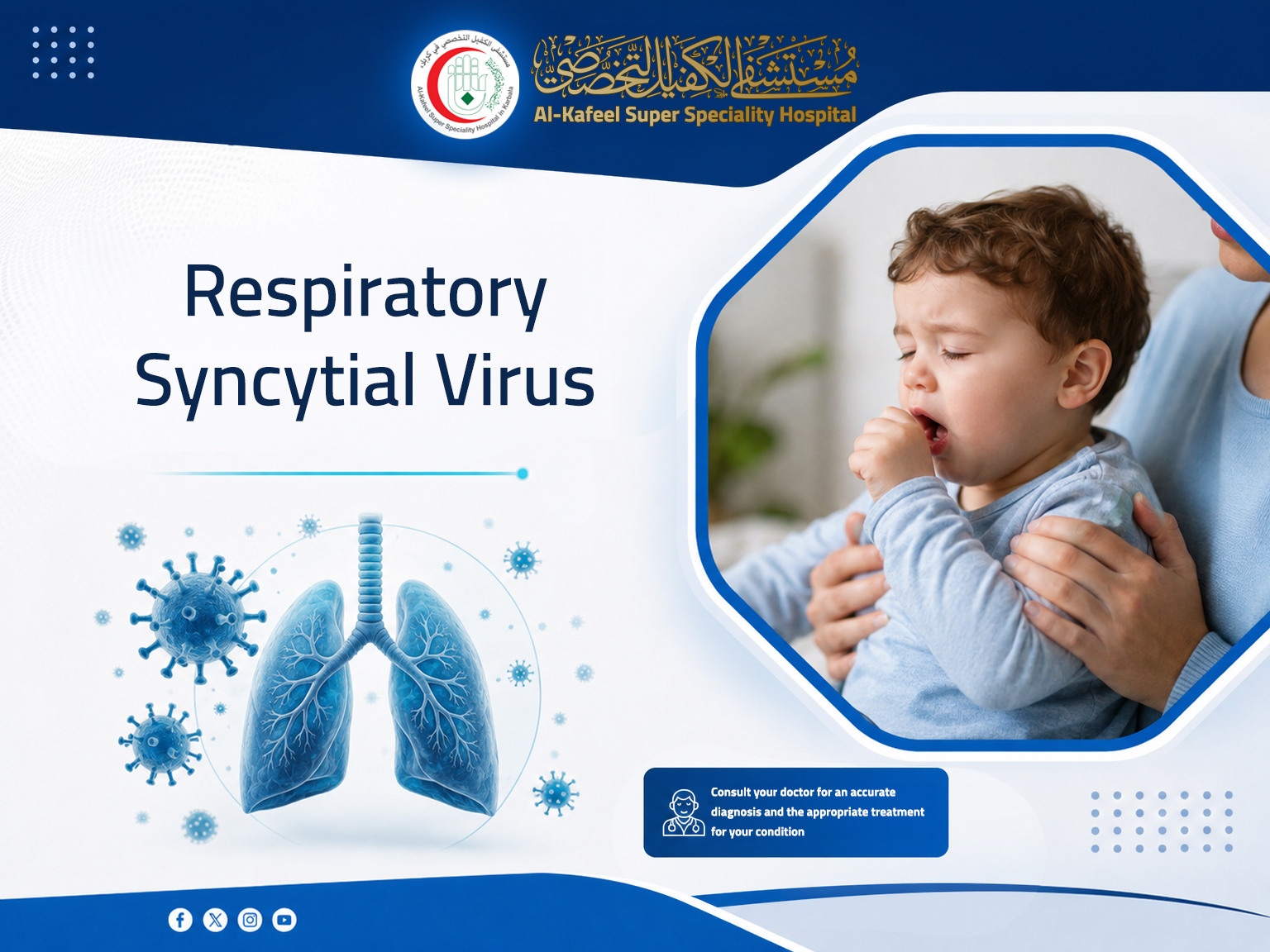
Respiratory syncytial virus is a virus that causes infection of the upper respiratory tract and lungs. It is a very common disease and affects most children before reaching two years of age, while in older children and adults it only leads to a mild cold and there is no need for special treatment for this disease.
Symptoms of Respiratory Syncytial Virus
Symptoms of infection with the virus appear 4 - 6 days after exposure to the virus.
1. Common symptoms of infection in adults
In adults and older children, these symptoms are similar to those of a mild cold, and they include:
• Nasal congestion.
• Dry cough.
• Slight rise in body temperature.
• Sore throat.
• Headaches.
• Feeling weak and restless.
2. Common symptoms of infection in children
Infants are particularly affected by the virus, and the following can be observed:
• The great effort they exert to breathe during infection with the disease.
• Rapid breathing.
• Coughing.
For older infants, we do not notice the presence of respiratory symptoms, but there is difficulty in feeding them, and they are also characterized by apathy and irritability.
3. Severe symptoms of infection with the virus
In severe cases of infection, the virus may lead to pneumonia or bronchiolitis. In such cases, the appearance of symptoms is more severe and includes:
• High fever.
• Severe cough.
• Wheezing sounds during breathing, especially when exhaling.
• Breathing rapidly, and difficulty breathing, which leads the patient to prefer sitting over lying down.
• A bluish appearance of the skin due to a lack of oxygen.
Causes and Risk Factors of Respiratory Syncytial Virus
The virus infiltrates the body through the nose, mouth, or eyes.
How is the virus transmitted?
The virus is transmitted in the following ways:
• Secretions contaminated with the virus, such as mucus fluid or saliva, are transmitted through inhalation or direct contact, for example, when shaking hands.
• The virus can withstand and survive for several hours on surfaces or objects, and when touching the contaminated object and touching the face, the infection is transmitted.
In the first days after the onset of the disease, the person is in the stage where they are most likely to transmit the infection to others, but they are also capable of transmitting it even after several weeks.
The group most susceptible to infection with the virus
The people most susceptible to contracting the disease are:
• Infants under six months of age.
• Infants under one year of age, or those born prematurely, or who suffer from congenital heart or lung diseases since birth.
• Children with weak immune systems due to various diseases or due to chemotherapy.
• The elderly.
• Adults suffering from heart failure or Chronic Obstructive Pulmonary Disease (COPD).
• Adults with weak immune systems, due to illness, or after organ transplants, or chemotherapy.
Complications of Respiratory Syncytial Virus
Complications of respiratory syncytial virus include:
• The need for hospitalization: There is a need to stay in the hospital when severely infected with the disease, in order to undergo medical supervision, and to facilitate the patient's breathing process, and give them intravenous fluids when needed.
• Pneumonia or bronchiolitis: It is possible for the virus to move from the upper to the lower respiratory tract, and cause a serious disease in that area.
• Otitis media: The transfer of the virus to the area behind the eardrum in the ear can lead to an infection there.
Diagnosis of Respiratory Syncytial Virus
The diagnosis of respiratory syncytial virus generally depends on the following matters:
• The patient's clinical condition.
• Listening to the sound of the lungs.
• Measuring blood oxygen saturation.
• Conducting blood tests that may indicate the presence of an infection.
• Chest radiography.
• Conducting a test of a sample taken from inside the nose.
Treatment of Respiratory Syncytial Virus
The standard treatment method is as follows:
• Over-the-counter antipyretic and pain-relieving medications, such as Paracetamol or Ibuprofen.
• Humidifying the air with the help of a vaporizer.
• Maintaining an upright position, which facilitates the breathing process.
• Emphasizing drinking fluids.
• Spraying saline drops with the help of a nasal spray to facilitate breathing.
• Abstaining from smoking cigarettes.
• Artificial respiration through a special device in severe cases.
Antibiotics are considered useless in this case, because the contamination is a viral and not a bacterial contamination. Antibiotics are used only when a local bacterial infection occurs due to the virus.
Prevention of Respiratory Syncytial Virus
There is no vaccination to prevent infection with the virus, but some simple steps can help prevent the spread of the virus:
• Washing hands frequently: This must be emphasized, especially before touching infants at home, in addition to teaching other children at home the importance of washing hands.
• Abstaining from exposure to the virus: One must abstain from exposing infants under two months of age or premature babies to anyone suffering from high body temperature or a cold.
• Paying attention to maintaining hygiene: Emphasizing general hygiene in the home, especially eating utensils, the kitchen, bathrooms, and toilets. When a child catches a cold, care must be taken to immediately throw used paper tissues into the trash.
• Not sharing the same cup for drinking with others: Ensuring that each family member has their own cup, from which only they drink.
• Abstaining from smoking: Cigarette smoke increases the risk of infection, as well as the severity of the disease, therefore smoking near infants is prohibited.
• Cleaning toys: Paying attention to and emphasizing cleaning toys as part of the daily routine.
• Giving children Palivizumab medication: It is a medication intended for children at a high risk of contracting the virus. It is administered via injection once a month during the peak season of the virus's spread. It has been proven that this treatment reduces the chances of infection, and it also shortens the duration of the disease, treatment days, and hospital stays necessary following this infection.
Respiratory Syncytial Virus
Respiratory syncytial virus is a virus that causes infection of the upper respiratory tract and lungs. It is a very common disease and affects most children before reaching two years of age, while in older children and adults it only leads to a mild cold and there is no need for special treatment for this disease.
Symptoms of Respiratory Syncytial Virus
Symptoms of infection with the virus appear 4 - 6 days after exposure to the virus.
1. Common symptoms of infection in adults
In adults and older children, these symptoms are similar to those of a mild cold, and they include:
Nasal congestion.
Dry cough.
Slight rise in body temperature.
Sore throat.
Headaches.
Feeling weak and restless.
2. Common symptoms of infection in children
Infants are particularly affected by the virus, and the following can be observed:
The great effort they exert to breathe during infection with the disease.
Rapid breathing.
Coughing.
For older infants, we do not notice the presence of respiratory symptoms, but there is difficulty in feeding them, and they are also characterized by apathy and irritability.
3. Severe symptoms of infection with the virus
In severe cases of infection, the virus may lead to pneumonia or bronchiolitis. In such cases, the appearance of symptoms is more severe and includes:
High fever.
Severe cough.
Wheezing sounds during breathing, especially when exhaling.
Breathing rapidly, and difficulty breathing, which leads the patient to prefer sitting over lying down.
A bluish appearance of the skin due to a lack of oxygen.
Causes and Risk Factors of Respiratory Syncytial Virus
The virus infiltrates the body through the nose, mouth, or eyes.
How is the virus transmitted?
The virus is transmitted in the following ways:
Secretions contaminated with the virus, such as mucus fluid or saliva, are transmitted through inhalation or direct contact, for example, when shaking hands.
The virus can withstand and survive for several hours on surfaces or objects, and when touching the contaminated object and touching the face, the infection is transmitted.
In the first days after the onset of the disease, the person is in the stage where they are most likely to transmit the infection to others, but they are also capable of transmitting it even after several weeks.
The group most susceptible to infection with the virus
The people most susceptible to contracting the disease are:
Infants under six months of age.
Infants under one year of age, or those born prematurely, or who suffer from congenital heart or lung diseases since birth.
Children with weak immune systems due to various diseases or due to chemotherapy.
The elderly.
Adults suffering from heart failure or Chronic Obstructive Pulmonary Disease (COPD).
Adults with weak immune systems, due to illness, or after organ transplants, or chemotherapy.
Complications of Respiratory Syncytial Virus
Complications of respiratory syncytial virus include:
The need for hospitalization: There is a need to stay in the hospital when severely infected with the disease, in order to undergo medical supervision, and to facilitate the patient's breathing process, and give them intravenous fluids when needed.
Pneumonia or bronchiolitis: It is possible for the virus to move from the upper to the lower respiratory tract, and cause a serious disease in that area.
Otitis media: The transfer of the virus to the area behind the eardrum in the ear can lead to an infection there.
Diagnosis of Respiratory Syncytial Virus
The diagnosis of respiratory syncytial virus generally depends on the following matters:
The patient's clinical condition.
Listening to the sound of the lungs.
Measuring blood oxygen saturation.
Conducting blood tests that may indicate the presence of an infection.
Chest radiography.
Conducting a test of a sample taken from inside the nose.
Treatment of Respiratory Syncytial Virus
The standard treatment method is as follows:
Over-the-counter antipyretic and pain-relieving medications, such as Paracetamol or Ibuprofen.
Humidifying the air with the help of a vaporizer.
Maintaining an upright position, which facilitates the breathing process.
Emphasizing drinking fluids.
Spraying saline drops with the help of a nasal spray to facilitate breathing.
Abstaining from smoking cigarettes.
Artificial respiration through a special device in severe cases.
Antibiotics are considered useless in this case, because the contamination is a viral and not a bacterial contamination. Antibiotics are used only when a local bacterial infection occurs due to the virus.
Prevention of Respiratory Syncytial Virus
There is no vaccination to prevent infection with the virus, but some simple steps can help prevent the spread of the virus:
Washing hands frequently: This must be emphasized, especially before touching infants at home, in addition to teaching other children at home the importance of washing hands.
Abstaining from exposure to the virus: One must abstain from exposing infants under two months of age or premature babies to anyone suffering from high body temperature or a cold.
Paying attention to maintaining hygiene: Emphasizing general hygiene in the home, especially eating utensils, the kitchen, bathrooms, and toilets. When a child catches a cold, care must be taken to immediately throw used paper tissues into the trash.
Not sharing the same cup for drinking with others: Ensuring that each family member has their own cup, from which only they drink.
Abstaining from smoking: Cigarette smoke increases the risk of infection, as well as the severity of the disease, therefore smoking near infants is prohibited.
Cleaning toys: Paying attention to and emphasizing cleaning toys as part of the daily routine.
Giving children Palivizumab medication: It is a medication intended for children at a high risk of contracting the virus. It is administered via injection once a month during the peak season of the virus's spread. It has been proven that this treatment reduces the chances of infection, and it also shortens the duration of the disease, treatment days, and hospital stays necessary following this infection.