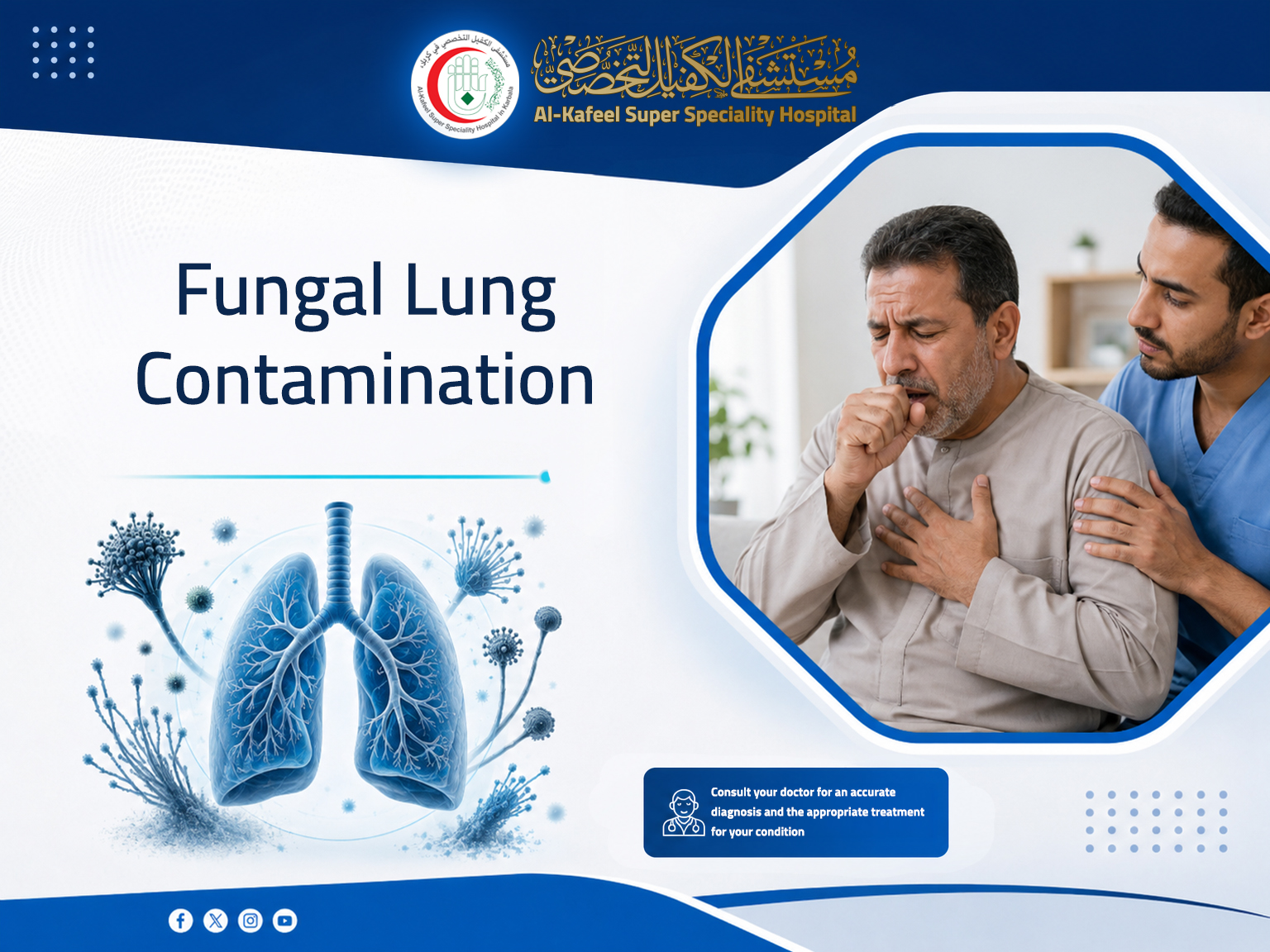
Fungal lung contamination is a pneumonia caused by hypersensitivity that occurs upon exposure to allergenic fungal spores and compost associated with mushrooms.
Mushroom worker's lung disease is considered one of the most common inflammatory conditions associated with exposure to mushroom spores, and it should also be noted that lung contamination is a part of fungal pneumonia as it occurs due to fungal spores in the air or soil.
It is common in people suffering from symptoms of weak immunity, and if not treated, it can be extremely dangerous and even fatal.
The types of fungi that cause a fungal lung contamination, get to know them:
• Pneumocystis fungi.
• Cryptococcus fungi.
• Aspergillus fungi.
Types of Fungal Lung Contamination
Also learn about the types of pneumonia based on the infection-causing fungi, which include the following:
1. Pneumonia
This type is produced by a yeast-derived fungus called Pneumocystis and mostly affects people suffering from immunodeficiency, therefore it may cause them many symptoms.
2. Valley Fever
Valley fever is known as Coccidioidomycosis and usually infects people who are 60 years of age, or people exposed to dusty environments, such as: farm workers and construction workers.
3. Histoplasmosis
Histoplasmosis occurs due to Histoplasma fungi, and mostly they disappear on their own, although some cases may become severe and advanced, as they may spread from the lungs to other parts of the body, such as: the spinal cord, and the brain.
4. Cryptococcus
It infects people who suffer from a weakness in the immune system, and if it is not treated, it may develop into more dangerous complications.
5. Aspergillosis
It is considered an airborne fungus and the most widespread as it is present in many indoor and outdoor environments, and infects patients who suffer from severe immunodeficiency. This type of infection can cause the growth of masses known as fungal balls in the lungs, which may also spread to other organs.
Symptoms of Fungal Lung Contamination
The most prominent symptoms of a fungal lung contamination include the following:
1. General symptoms of a fungal lung contamination
They include the following:
• Acute lung disease.
• Cough.
• Fever.
• Phlegm.
• Cold.
• Pain during breathing.
• Shortness of breath.
• Weight loss.
• Loss of appetite.
• Nausea and vomiting.
• Diarrhea.
The symptoms may vary depending on the types of cultivated fungi, and mostly the symptoms appear 4 - 6 hours after leaving the area containing the mushroom spores. It is also worth noting that age plays an important role in the type and severity of symptoms in people, as older adults tend to have mild pneumonia symptoms, while infants and young children may find difficulty feeding, have pale skin, face breathing difficulties, and have decreased urine output.
2. Symptoms of Pneumonia
• Pains.
• Cough.
• Fever.
• Pain in the chest.
3. Symptoms of Valley Fever
Such as:
• Fever.
• Cough.
• Headache.
• Skin rash.
• Muscle and joint pain.
4. Symptoms of Histoplasmosis
Which are as follows:
• Fatigue.
• Fever.
• Cough.
2. Symptoms requiring an immediate visit to the doctor
If one of the following symptoms appears, a doctor must be consulted immediately, and the most prominent of these symptoms are:
• Continuous shortness of breath.
• Long-lasting fever accompanied by thick mucus.
• Severe fatigue.
• Shortness of breath even at rest.
• Pain and discomfort in the chest.
• Confusion.
• Disturbed thinking.
Causes and Risk Factors of Fungal Lung Contamination
Learn about the causes and risk factors leading to a fungal lung contamination:
1. Causes of fungal lung contamination
A fungal lung contamination occurs due to the inhalation of certain substances that arise from mushroom cultivation, and more precisely, it is an infrequent condition that happens to agricultural workers who are often exposed to dust resulting from moldy fodder and plant materials. Therefore, mushroom worker's lung disease may be an occupational lung disease due to hypersensitivity to the antigen resulting from moldy fodder dust. These fungi are also found in clinical environments or in hospitals, which leads to pneumonia infection.
2. Risk factors leading to fungal lung contamination
These include the following:
• People suffering from weak immunity.
• People infected with chronic diseases, such as: Human Immunodeficiency Virus (HIV).
• Cancer patients undergoing chemotherapy.
• Patients taking high doses of corticosteroids.
• People infected with autoimmune disorders, such as: Lupus, and Multiple Sclerosis.
• Patients suffering from blood disorders.
• Bone marrow transplant patients.
• Lung diseases, such as: Cystic Fibrosis, Asthma, and Chronic Obstructive Pulmonary Disease (COPD).
• Diabetes.
• Smoking.
• Adults over the age of 65.
• Children under the age of two.
Complications of Fungal Lung Contamination
The most prominent complications include the following:
1. Complications of fungal lung contamination
Exposure to high concentrations of mushroom spores may lead to the following:
• Rhinitis.
• Asthma.
• Allergic bronchopulmonary mycosis.
• Allergic fungal sinusitis.
• Hypersensitivity pneumonitis.
• Nerve damage.
• Infection in the brain.
• Infection in the spinal cord.
• Meningitis.
2. Complications of Pneumonia
The most prominent are:
• Lung abscess: A viscous yellow or green fluid may collect in the cavities of the lungs and may cause pus.
• Pleural disorders: The pleura becomes diseased or inflamed.
• Pulmonary edema: This condition causes a buildup of fluids in the lungs and leads to breathing difficulties.
• Respiratory failure: Acute inflammation inside the lungs prevents them from performing their function of bringing in oxygen and removing carbon dioxide, which hinders breathing.
3. Serious complications
It is possible for some serious complications to occur, such as:
• Fungal meningitis: If the infection spreads to the cerebrospinal fluid surrounding the brain and spine, fungal meningitis arises.
• Kidney failure: Fungal pneumonia leads to kidney damage, which leads to the accumulation of harmful waste inside the body.
• Another organ failure: It is possible for the liver and spleen to be damaged as the infection progresses in the body.
• Cardiac effects: Severe pneumonia cases lead to heart problems and circulatory problems, and consequently, the risk of stroke, heart failure, and heart attack increases.
• Mycetoma (fungal tumors): The condition may progress and the person may develop fungal tumors, especially if infected with aspergillosis.
Prevention of Fungal Lung Contamination
To prevent a fungal lung contamination, we present to you some prevention methods, which include the following:
• Wearing a full-face mask.
• Ensuring that indoor work areas are well-ventilated.


-
Celebration of Imam Ali’s Birth Anniversary
Medical Units for Arbaeen Pilgrimage
Celebration of the Prophet Muhammad's (PBUH) Birth Anniversary
Celebration of Lady Zainab's (peace be upon her) Birth Anniversary
Bringing Joy to Patients on the Occasion of Imam Ali’s (peace be upon him) Birth Anniversary
Alkafeel Hospital Celebrates the Birth Anniversary of Imam Hussein (peace be upon him)
Joy Fills Alkafeel Hospital on the Birth Anniversary of Abu Al-Fadl Al-Abbas (peace be upon him)
Al-Kafeel Hospital participates in Arbaeen pilgrimage
-
Job Fair Participation at Al-Kafeel University
First Al-Kafeel Symposium on Musculoskeletal and Spine Surgery
IT Forum in Dhi Qar
University of Al-Kafeel Scientific Conference
Baghdad International Fair
Alkafeel Hospital Participates in the Sixth International Medical Sciences Conference at Al-Kafeel University
Alkafeel Hospital Participates in Iraq’s First Medical Tourism Conference, Affirming Its Pioneering Role in Health Sector Development
-
Training Lecture on Hospital Hospitality Services
Civil Defense Training Program
Training Program for Sama Karbala Foundation Staff
Workshop for Administrative Development Academy Trainees
Training for Turkish Hospital Medical Staff
Cervical Cancer screening Workshop
Scientific workshop for anesthesia students
Nursing Workshop for Dhi-Qar Province
Workshop on Quality and International Accreditation Standards
Hand Hygiene Training Workshop
Laboratory Training for Sama Karbala Foundation Staff
Wound Care Training for University Students
Scientific Workshop on General Surgery
Scientific Lecture on European Society of Cardiology Guidelines
Surgical Suturing Workshop for Medical Students
Accounting System Workshop for Administrative Development Academy Students
Risk Management Training
Training on Electrocardiography and Cardiac Arrhythmia Management
Proper Handwashing Techniques Workshop
Educational Lecture on Benign Prostatic Hyperplasia
Interactive Lecture for Medical Students of Al-Ameed University
Training on Cardiopulmonary Resuscitation for Dental Students
Security Staff Training on Explosives Detection Device “ID”
Delegation of Biomedical Engineering Students from Al-Safwa University
Human Resources Workshop for Hospital Departments
Radiation Protection Training Course
Quality of Medical Services Presentation
Fire Safety Training Workshop
Scientific Workshop on "Patient Safety"
Research Development Initiatives
Medical Training Workshop for University Students
Accounting Department Workshop
First Aid Training Workshop
Awareness Lecture on Early Breast Cancer Detection for Al-Siddiqa Al-Tahira Center
Training Program for Karbala Health Directorate Staff
Crisis Management and Fire Safety Training for Staff
Emergency Nursing Response Workshop
Students of the Administrative Development Academy Meet to Discuss the "Healthy Hospital" Project at Alkafeel Hospital
Successful Workshop on Workplace Etiquette Held at Alkafeel Hospital
Alkafeel Hospital Enhances Patient Satisfaction Through Specialized Training Course
Alkafeel Hospital Organizes Training Workshop to Enhance Anesthesiologists' Competency
Successful Breast Cancer Awareness Lecture at Alkafeel Hospital
Successful Workshop on PET Scan Technology Held at Alkafeel Hospital
Alkafeel Hospital Enhances Pharmacy Students’ Practical Skills
Alkafeel Hospital Emphasizes the Importance of Early Detection of Breast Cancer
Director of Alkafeel Hospital Discusses Development Strategies with General Surgery Team
Alkafeel Hospital Administration Strengthens Collaboration with Neurosurgery Team
Parliamentary Committee Commends Services at Alkafeel Hospital
Successful Workshop on Safety Practices Concludes at Alkafeel Hospital
Alkafeel Hospital Hosts Specialized Workshop on “Rezūm” Technology for Treating Benign Prostatic Hyperplasia
Alkafeel Hospital Enhances Efficiency of Its Human Resources Department
Organizational Meeting to Clarify the 2025 Postgraduate Application Process
Al-Kafeel Hospital Trains Its Staff on Safety and Evacuation Procedures
Sheikh Salah Al-Karbalai Delivers Religious Lecture to Alkafeel Staff
Alkafeel Training Center Concludes a Successful Scientific Day in Dentistry
Civil Defense Training at Alkafeel Hospital
English Debate at the Nursing Department
Meeting between Al-Kafeel Hospital and Al-Zaki Hospital in Babylon
Al-Kafeel Hospital participates in a workshop on Mass-Care Nursing
-
Spinal Surgery Patient Referrals
Spanish University Delegation Visit
Visit by Iraqi Ministry of Interior Delegation
Collaboration with Anwar Sheikha Hospital
Visit by College of Medicine, University of Diyala
Visit by Iraqi Ministry of Health Delegation
Shiraz University Delegation Visit
Visit by Faculty of Science – University of Karbala
Treatment of Pediatric Cardiac Patients
Memorandum of Understanding with Aster Medical Group
Delegation from Shahid Rajaei Hospital, Iran
Dr. Jassim Al-Ibrahimi Meets with Ministry of Health Referral Committee
Delegation of Medical Devices Students from Al-Mustaqbal University
Delegation of Medical Physics Students from University of Karbala
Student Delegation from Warith University
Meeting Between Dr. Jassim Al-Ibrahimi (CEO) and Department Heads
Visit by Croatian Academic Delegation
Meeting Between Al-Kafeel and Al-Battat Hospitals
Visit by Ministry of Health Delegation
Admission of Spinal Surgery Patients
Pediatric Cardiac Surgery Referrals
Meeting with Medical Students – Al-Ameed University
Collaboration with Karbala Nursing Syndicate
Visit by Al-Nahrain University Students
Dr. Jassim Al-Ibrahimi (CEO) Meets Top English Language Graduates
Visit by Al-Mustaqbal University Students
Alkafeel Hospital Holds Meeting with Dr. Moataz, Specialist in Internal Medicine
Alkafeel Hospital and Ministry of Water Resources Collaborate to Promote Public Health
High-Level Georgian Delegation Visits Alkafeel Hospital
French Delegation Visits Alkafeel Hospital: Toward Advanced Medical Collaboration
"A Leading Partnership to Support the Future of Engineers": Alkafeel Hospital Signs Cooperation Agreement with the College of Engineering at the University of Karbala
Alkafeel Hospital Provides Medical Care to the Blind Football Federation Players
High-Level Swiss Delegation Visits Alkafeel Hospital
Al-Nahrain University and Alkafeel Hospital Discuss Prospects for Joint Cooperation
President of the University of Babylon Explores Alkafeel Hospital’s Services and Discusses Future Cooperation
Alkafeel Hospital Commends the Civil Defense Directorate for Their Support
High-Level Georgian Delegation Visits Alkafeel Hospital
Academic Collaboration Between the University of Karbala and Alkafeel Hospital
Prospective Academic Cooperation Between the University of Karbala and Alkafeel Hospital
Ministry of Health Delegation Praises Dental Center at Alkafeel Hospital
Ongoing Collaboration Between Alkafeel Hospital and the Ministry of Health in Corneal Transplantation
Alkafeel Hospital Receives a New Group of Spinal Deformity Patients
Academic Delegation Praises Alkafeel Hospital
Expanding Health Insurance Coverage: Discussions Between the Al-Abbas Shrine and the Ministry of Health
Delegation from the Imamia Medics International Visits Alkafeel Hospital
Productive Academic Collaboration Between Al-Kafeel Hospital and the University of Babylon
College of Tourism at Al-Mustansiriya University: Al-Kafeel Hospital Sets a Distinguished Standard in Hospitality Services
Al-Kafeel Hospital Hosts Medical Delegation from Al-Muthanna Hospital
Citizens: Alkafeel is a Pioneer in Pediatric Cardiac Surgery and an Alternative to Medical Travel Abroad
Alkafeel Hospital Opens New Avenues of Collaboration with Maysan Health Directorate
Algerian Delegation Explores Alkafeel Hospital’s Advanced Medical Technologies
Qatari Delegation Visits Alkafeel Hospital to Discuss Joint Collaboration
Alkafeel Hospital Launches a Successful Vision Care Initiative in Maysan
Signing of a Cooperation Agreement between Alkafeel Hospital and the University of Karbala
Visit of Al-Ameed University Students to Alkafeel Hospital
Eye Examinations and Treatment for Students from Maysan Schools at Alkafeel Hospital
Visit of the Health Insurance Authority Delegation to Alkafeel Hospital
Alkafeel Hospital and Marina Al-Ahly Hospital Sign Memorandum of Understanding
Visit of Dr. Jassim Al-Ebrahimi to Marina Surgical Hospital
Al-Kafeel Hospital prepares for the Health Insurance Program
Link copied