


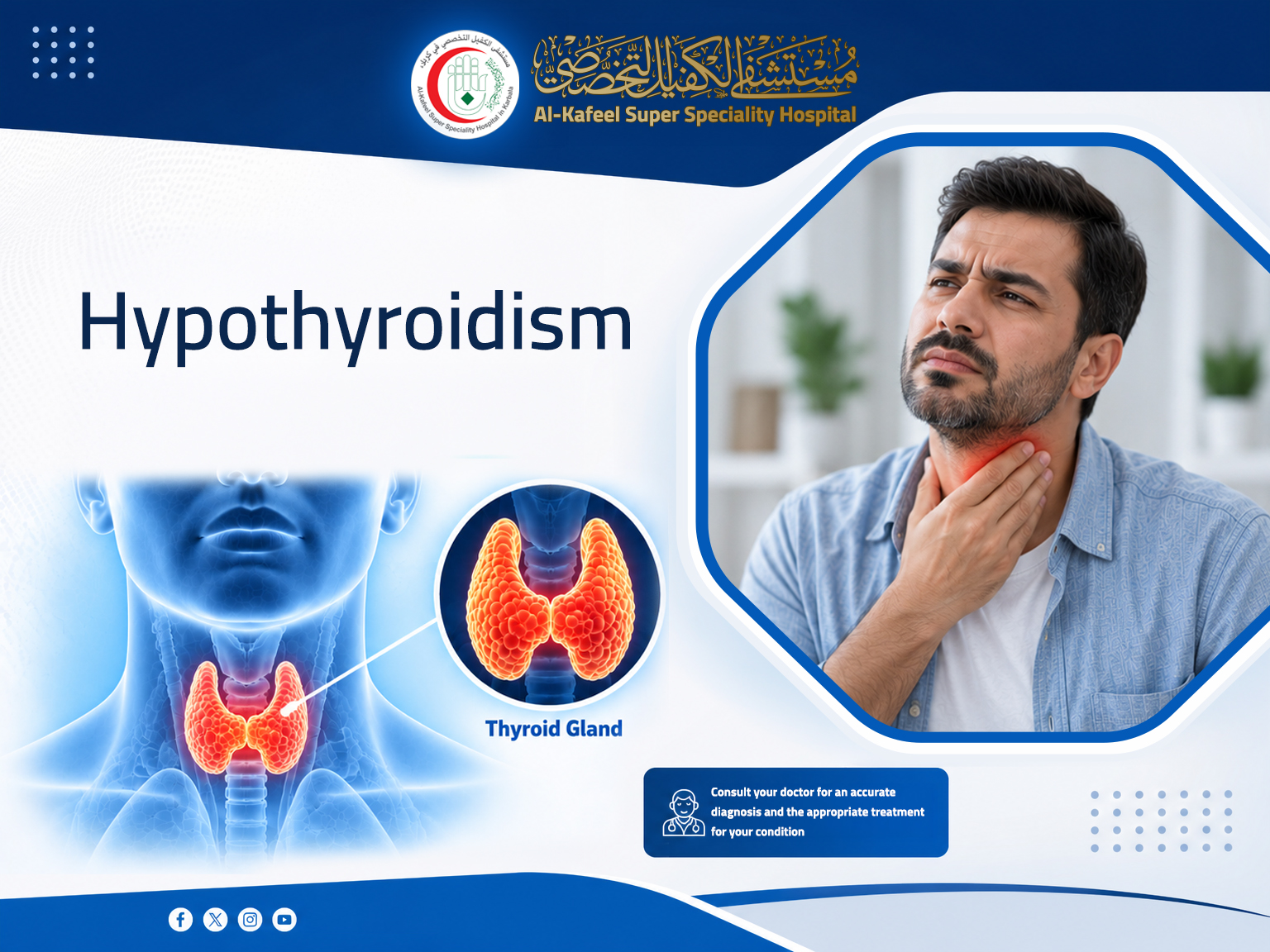
Hypothyroidism is a disease resulting from a deficiency in the two thyroid hormones, thyroxine and triiodothyronine, in the body's tissues.
This disease results from continuous inflammation that damages the gland and its functional performance, and this inflammation arises due to antibodies produced in the patient's immune system that attack the gland and lead to its gradual destruction which cannot be prevented or stopped.
This disease is hereditary, sometimes affecting more than one individual in the same family, as there is a very high percentage of antibodies in the blood of those infected with Hashimoto's disease that attack the main protein produced by the thyroid gland cells, which is thyroglobulin, and also attack the peroxidase enzyme necessary to produce the two hormones thyroxine and triiodothyronine.
This disease affects women more than
it affects men at a ratio of 4:1 and the elderly at a ratio of 8:1, as this
disease may appear at any stage of life but the probability of its appearance
increases with age
Symptoms of Hypothyroidism
Hypothyroidism appears in several different signs and symptoms, as the signs and symptoms include the following:
Fatigue.
General weakness
Sleepiness.
Decline in academic achievement.
Weight gain
Sensitivity to cold.
Pain in the muscles and joints
Forgetfulness and memory disorders
Excessive hair loss.
Constipation.
Heavy menstrual bleeding.
Fertility problems.
Mood swings.
Depression.
Hearing impairment.
Dryness in the skin and hair.
Blurred vision.
Hoarseness.
Decreased appetite.
Sweating in the palms of the hands.
Slowness in speech.
Swelling in the face and around the eyes.
Slowness in movement and the appearance of edema in the legs.
Elderly people infected by hypothyroidism may develop other additional symptoms such as a decline in the functional performance of the brain, a condition very similar to dementia.
The doctor may also notice during the physical examination the presence of the following signs and symptoms:
Enlargement in the thyroid gland.
Slow pulse.
Dryness in the skin.
Slow reflexes.
Paleness of skin color and a tendency towards yellowness.
A rise in blood pressure.
Laboratory tests may also show the presence of anemia, a decrease in the level of sodium in the blood, and an increase in the level of both cholesterol and blood triglycerides.
Causes and Risk Factors of Hypothyroidism
Risk factors and causes include the following:
1. Primary causes of hypothyroidism
The causes of this disease are divided into three main groups and include:
Primary hypothyroidism: When the thyroid gland is unable to produce hormones due to factors that caused damage to the gland.
Secondary hypothyroidism: When the production of thyroid-stimulating hormone in the pituitary gland, which is the monitoring hormone for the thyroid gland, is damaged.
Tertiary hypothyroidism: When the production of thyrotropin-releasing hormone in the hypothalamus, which is the monitoring hormone for the pituitary gland, is damaged.
2. Other causes of hypothyroidism
Primary hypothyroidism is the most
widespread cause and occurs in a variety of conditions that include
Hashimoto's thyroiditis, which is a chronic inflammation in the thyroid gland that is sometimes accompanied by an enlargement of the thyroid gland.
Damage to the thyroid gland due to radioactive iodine used in treating hyperthyroidism or in treating cancerous tumors in the thyroid gland.
After surgical removal of the thyroid gland.
Damage to the thyroid gland as a result of subacute thyroiditis.
Taking iodine in a high dose.
Disorder in the functioning of the gland as a result of taking certain medications such as: lithium, amiodarone, and dopamine.
Postpartum hypothyroidism resulting from inflammation and usually resolves spontaneously.
Rare causes from birth include a genetic defect in the production of thyroid hormones or a deficiency in iodine.
Hashimoto's thyroiditis constitutes the most widespread cause of hypothyroidism.
Complications of Hypothyroidism
Complications include the following
Enlargement of the thyroid gland; continuous stimulation of the thyroid gland to secrete more hormones may lead to enlargement of the gland, a condition known as goiter.
Heart diseases.
Mental health diseases.
Peripheral neuropathy
Myxedema
Infertility
Congenital defects.
Diagnosis of Hypothyroidism
Today, primary hypothyroidism can be diagnosed early and effectively by testing the level of thyroid-stimulating hormone thyrotropin, which is the hormone produced in the pituitary gland and stimulates the production of thyroid hormones.
When thyroid hormones are produced, they send a signal to the pituitary gland and thus a healthy level of triiodothyronine hormone in the blood is maintained, and when the production of thyroid hormones is insufficient, that signal is not sent, which leads to a rise in TSH (thyroid-stimulating hormone) levels in the blood.
Primary hypothyroidism is diagnosed
when there is a high level of triiodothyronine hormone in the blood, while the
diagnosis of secondary and tertiary hypothyroidism is made based on information
about previous diseases that affected the pituitary gland and hypothalamus, and
with the help of special tests designed to evaluate the reaction of
triiodothyronine hormone
Treatment of Hypothyroidism
The treatment of hypothyroidism is relatively easy, as levothyroxine and thyroxine tablets are taken, which contain the hormone triiodothyronine that the body finds difficult to produce, once every day.
The medication dose is adjusted gradually, and in any case, leaving hypothyroidism without proper treatment may increase the severity of the disease.
Prevention of Hypothyroidism
There is no way to prevent hypothyroidism, but people who may be more susceptible to developing thyroid problems such as women during pregnancy must consult a doctor regarding the need to increase iodine.