

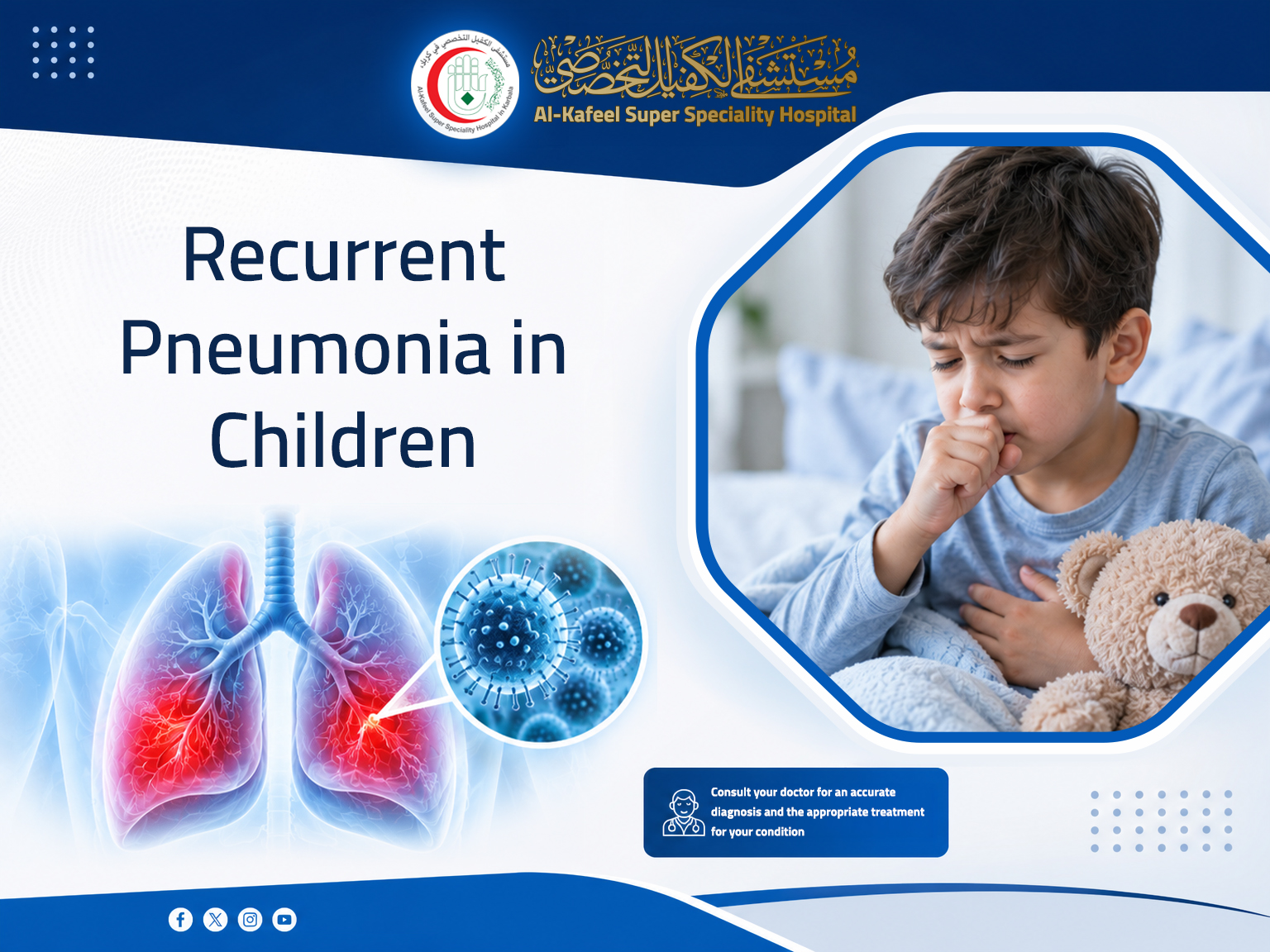
Complaints related to respiratory tract infections in children are frequent and widespread, so it is necessary to diagnose conditions that lead to significant harm in children, which require the necessary medical inquiries and treatment.
The first stages of medical inquiry are based on reviewing and checking the child's medical history for premature birth in premature infants, or the appearance of congenital anomalies which may be accompanied by recurrent respiratory tract infections since early childhood.
Most Prominent Information About Recurrent Pneumonia
Here is the most important information about recurrent pneumonia in children:
Asthma is the most widespread inflammatory lung disease, and it is very similar to recurrent pneumonia. Asthma is a chronic inflammatory disease that affects the respiratory tract, and having asthma leads to continuous coughing and recurrent infections. Chest imaging results are usually inconclusive. If the child has a medical history that raises suspicions of asthma, tests and examinations are performed, including allergy tests, lung function tests, and challenge tests.
If the infection recurs in the same part of the lung, there may be a need to check if the child has inhaled a foreign body into the respiratory tract, such as: nuts, or very hard seeds, or perhaps there is a problem in the structure of that part of the lung since birth.
Occasionally, cases of acquired obstruction in the respiratory tract may occur, which may have arisen following the appearance of tuberculosis in the trachea, or due to a tumor.
There are other rare congenital conditions that cause pneumonia in the same place; these conditions include congenital defects, such as a vascular ring, which arises when the trachea is subjected to pressure from blood vessels, and this condition usually requires surgical intervention to repair the damage.
If the infection recurs in different areas of the lung, this enables us to rule out infection with diseases that affect the body's systems, such as: Cystic Fibrosis, and a disorder in lung emptying due to Kartagener syndrome, as well as ruling out the possibility of disorders in the immune system. In this case, recurrent infections may appear in different places in the body, such as: the skin, or the sinuses.
· Symptoms of Recurrent Pneumonia in Children
· Signs of pneumonia in children include the following:
· High temperature.
· Coughing.
· Chills.
· Rapid breathing.
· Breathing with snoring or wheezing sounds.
· Exerting effort to breathe.
· Vomiting.
· Stomach ache.
· Lethargy.
· Loss of appetite and unwillingness to breastfeed.
Muscle weakness and diseases related to hypotonia (reduced muscle tone).
Problems in the bones forming the chest, which may lead to difficulties in ventilating the lungs, and then to recurrent infections.
Causes and Risk Factors of Recurrent Pneumonia in Children
There are many causes and factors that lead to the development of pneumonia in children, the most important of which are:
1. Causes of pneumonia in children
Causes of pneumonia in children include the following:
Bronchiectasis: Recurrent localized pneumonia may be a reflection of bronchiectasis, and airway dilation is often due to catching a previous infection. This condition is accompanied by a continuous cough and the expectoration of phlegm, mostly in the morning hours.
Weak immune system: Recurrent pneumonia may appear in children who have been diagnosed with malignant diseases, or those who have had a bone marrow transplant, and this is due to their weak immune system following their exposure to these diseases or therapeutic procedures.
These children may develop recurrent pneumonia resulting from an infection, and they may develop pneumonia resulting from chronic infections without catching an infection.
2. Risk Factors
The most important factors that increase the risk of developing pneumonia in children include the following:
Exposure to diseases that weaken immunity, such as: AIDS, and measles.
Living in a crowded environment.
Indoor air pollution resulting from cooking and heating.
Parents smoking.
Complications of Recurrent Pneumonia in Children
Complications of recurrent pneumonia in children include:
1. Difficulty breathing
Pneumonia in children with chronic lung diseases can cause difficulty breathing and not getting enough oxygen.
2. Fluid accumulation around the lungs
Pneumonia can cause fluid to accumulate in the space between the lung tissues and the chest cavity, and it is possible for the fluid to become infected and need to be drained through surgery, or by placing a chest tube.
3. Bacteria in the blood
Bacteria can enter the bloodstream from the lungs and spread the infection to other organs.
4. Lung abscess
When pus forms in a cavity in the lungs, it is known as a lung abscess, and it requires antibiotics and sometimes the need for drainage.
Diagnosis of Recurrent Pneumonia in Children
Recurrent pneumonia in children is diagnosed as follows:
1. Accurate medical inquiry
The diagnostic process must begin with an accurate medical inquiry of events, such as: the child's exposure to an incident of swallowing seeds, or nuts, or if the child went through a choking incident.
Inquiries and checks are also made if there is a possibility that the child has asthma, and checking the family's medical history such as the presence of asthma or cystic fibrosis in the family.
Also, the results of chest imaging are reviewed and checked to determine if there are any signs of noticeable infections, and if there are such infections, what is their nature? And are they localized in one place or widespread?
2. Bronchoscopy
As for the next stage of diagnosis after gathering information, the specialist performs a bronchoscopy using a flexible endoscope, where the respiratory tract is examined with an optical endoscope that enables direct viewing of the airway.
The child is anesthetized before the endoscopy, so the procedure is painless and the risk percentage is low. Bronchoscopy enables identifying blockages in the airway, where they may have been caused by foreign bodies, saliva, external pressure on the respiratory tract, or the presence of tumors.
During the examination, a sample can be taken to determine the type of bacteria or virus causing the infection, and it is also possible to distinguish the disease-causing agent based on the type of cells present in the taken sample.
3. Other tests
Other testing methods include:
The diagnosis may also include a chest computed tomography (CT) scan, which helps distinguish the presence of congenital anomalies in the lungs, or helps determine the exact location of bronchiectasis.
A lung perfusion scan is considered one of the additional methods that help determine the stage of blood perfusion in the lungs, and the stage of lung ventilation, and thus this scan contributes to diagnosing lung function disorders that may occur in different parts of the lungs.
The investigation process regarding the causes leading to the occurrence of recurrent pneumonia may include several types of blood tests, to distinguish the disorders that occur in the immune system to diagnose specific diseases and track the presence of genetic mutations in diseases where the causative genes have been identified, such as: Cystic Fibrosis.
A sweat test can be resorted to in order to detect Cystic Fibrosis infection.
Taking a biopsy of the cilia found in the respiratory tracts to detect if there is a defect in the structure of the cilia.
Treatment of Recurrent Pneumonia in Children
The treatment of recurrent pneumonia usually aims to treat the pneumonia itself; because symptoms and complications constitute an immediate source of concern in children, and the treatment usually follows the same path as normal pneumonia with medications. Given the presence of medical conditions of varying severity, it is necessary to identify these conditions, evaluate the risks and potential complications, and design the treatment accordingly.
The type of treatment depends on the cause of the pneumonia, the severity of the infection, and the child's age, and the most prominent treatment methods include the following:
1. Antibiotics
Antibiotics are medications that help eliminate bacteria, and they are used to treat bacterial pneumonia.
2. Over-the-counter pain relievers
3. The need for hospital treatment
Children may need to be admitted to the hospital to receive stronger treatment, especially if they have the following signs:
· Fast heart rate.
· Rapid breathing.
· Difficulty breathing.
· Low temperature.
· Dehydration.
· Age less than two months.
Prevention of Recurrent Pneumonia in Children
Preventing pneumonia in children is considered an essential component in the strategy to reduce child mortality, and the most prominent prevention methods include the following:
Vaccination against Haemophilus influenzae, pneumococcus, measles, and whooping cough is the most effective way to prevent pneumonia.
Adequate nutrition is the key to improving the natural defenses of children, starting with exclusive breastfeeding during the first six months of life, in addition to its effectiveness in preventing pneumonia.
Addressing environmental factors, such as: indoor air pollution by providing clean and affordable indoor stoves.
Encouraging good hygiene in crowded homes to reduce the number of children infected with pneumonia.
Giving an antibiotic, such as: trimethoprim and sulfamethoxazole daily to reduce the risk of developing pneumonia in children infected with the human immunodeficiency virus (HIV).