


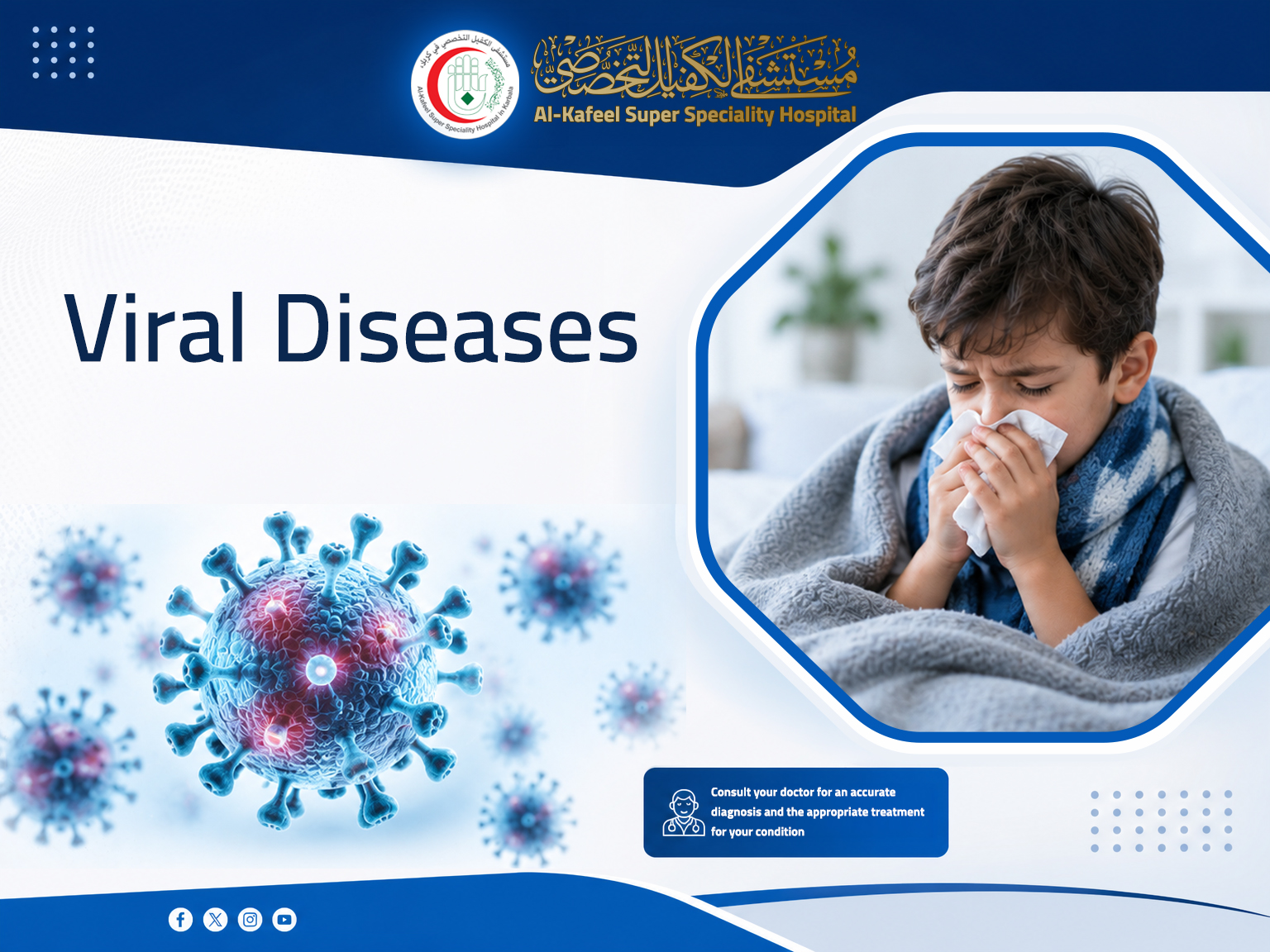
Viral diseases are diseases resulting from infection with a type of virus. Viruses are microorganisms composed of one type of genetic material; they may be composed of DNA (Deoxyribonucleic acid) or RNA (Ribonucleic acid), and this genetic material forming the virus is enclosed in a protein coat.
When viruses penetrate the human body, they begin their activity, as they use the components of the invaded cells in their reproduction process, which causes damage to the cells or their complete destruction.
Viral diseases have been of great importance throughout the ages, as the spread of some of their types leads to a complete change in the course of social and economic life, and the most prominent examples of this are:
Smallpox disease, which killed more than 300 million people.
The novel coronavirus disease, which changed the course of life in all countries.
It is worth noting that viral diseases may or may not be contagious, depending on the type of virus.
Most Prominent Types of Viral Diseases
Due to the large number of types of viral diseases, mentioning all of them is very difficult, so the most prominent and widespread viral diseases will be mentioned below:
1. Respiratory System Diseases
Respiratory diseases caused by viruses are a very common and widespread matter, and below a group of these viruses will be mentioned:
Respiratory syncytial virus.
Rhinovirus.
Coronavirus.
Adenovirus.
Epstein-Barr virus.
Severe acute respiratory syndrome-related coronavirus.
2. Digestive System Diseases
There is a large group of viruses that cause digestive
system disorders, and these viruses are represented by the following groups:
· Polioviruses.
· Coxsackieviruses.
· Echoviruses.
· Enteroviruses.
3. Reproductive System Diseases
Viral diseases that affect the reproductive system are very numerous, and below the most prominent types of viruses causing some of them will be mentioned:
· Herpes simplex virus.
· Human papillomavirus.
· Human immunodeficiency virus.
· Symptoms of Viral Diseases
It cannot be said that the symptoms of viral diseases are uniform, as the symptoms vary according to the type of virus and its location, so below the symptoms will be divided according to the most prominent viral diseases:
1. Symptoms of viral diseases affecting the respiratory system
Symptoms usually include the following:
· Nasal congestion.
· Cough.
· Runny nose.
· Fever.
· Body ache.
· Fatigue.
Shortness of breath.
2. Symptoms of viral diseases affecting the digestive system
Most symptoms of viral digestive diseases often include the following:
· Colic.
· Diarrhea or constipation.
· Vomiting and nausea.
· Feeling strange movements in the intestines.
· High body temperature.
3. Symptoms of viral diseases affecting the reproductive system
The most prominent symptoms of viral reproductive diseases include the following:
· Foul odor in the genital area.
· Abnormal secretions.
· Itching.
· Ulcers.
· Skin cracks leading to mild bleeding.
Causes and Risk Factors of Viral Diseases
The most prominent causes of viral disease types will be mentioned according to their type as follows:
1. Causes of viral diseases affecting the respiratory system
The main cause is often the transmission of viruses between
people through the following:
Inhaling the droplets of an infected person.
Using the tools of an infected person that are full of droplets.
2. Causes of viral diseases affecting the digestive system
The most prominent causes of contracting viral diseases in the digestive system include the following:
· Eating foods contaminated with the virus.
· Drinking fluids contaminated with the virus.
· Putting a virus-contaminated hand in the mouth.
3. Causes of viral diseases affecting the reproductive system
The most prominent causes of contracting viral reproductive diseases include the following:
Sexual contact with an infected person, and this often requires multiple instances of sexual contact for the infection to be transmitted.
Blood transfusion, where transferring blood from an infected person to a healthy one leads to direct infection with the disease.
Exposure to a wound from an instrument contaminated with the virus.
Sharing syringes used by multiple people and contaminated with the virus.
Complications of Viral Diseases
The most prominent complication in the event of an inability to confront the virus causing the disease is death, as every viral disease carries an associated mortality rate.
It is worth noting that this complication occurs at varying rates for each viral disease; for example, death from smallpox was very high before a vaccine was found for it, and this is contrary to what is observed in the mortality rates resulting from influenza of all types.
Diagnosis of Viral Diseases
Viral diseases are diagnosed through one of the following methods:
1. Antibody detection tests
The presence of an acute or recent viral infection can be confirmed by detecting the presence of specific Immunoglobulin M (IgM) in a serum sample, or a rise in specific Immunoglobulin G (IgG) in paired sera, as the presence of Immunoglobulin M and the absence of Immunoglobulin G indicates a previous infection with the virus.
2. Electron microscopy examination
The size of viruses is very small and cannot be seen with a light microscope; therefore, an electron microscope is used to determine the morphological shape of many human viruses. However, the electron microscope is not a tool routinely used to identify and diagnose viruses because viruses are usually present in very small numbers in clinical samples, and contaminating materials may obscure their presence and observation.
3. Culture
Viruses only reproduce in living cells; therefore, they are
cultured in the laboratory using single cell layers to allow them to grow and
reproduce, and then determine their type.
Treatment of Viral Diseases
The treatment of viral diseases is according to the type of virus and its location, so this will be detailed as follows:
1. Treatment of viral diseases affecting the respiratory system
Often, the treatment of most viral diseases affecting the respiratory system is self-treatment, meaning that the body creates antibodies and eliminate the virus within a few days of infection, but sometimes it may require some helpful medications, the most prominent of which are the following:
· Nasal decongestants.
· Cough suppressant medications.
· Pain relievers.
If the disease is very severe, the doctor may resort to prescribing specific antiviral medications.
2. Treatment of viral diseases affecting the digestive system
There are no specific treatments for viral digestive
diseases, as in most cases they are eliminated through the body's resistance to
them, but the following recommendations can be followed during infection to
limit complications:
· Drinking more fluids.
· Eating healthy foods and avoiding harmful ones, especially fried foods.
· Drinking infusions of some colic-relieving herbs, such as: mint infusion, chamomile infusion, and sage infusion.
3. Treatment of viral diseases affecting the reproductive system
Treating viral reproductive diseases requires many procedures, and unfortunately, some of these diseases cannot be cured, such as AIDS, and the goal of the medications is only to alleviate symptoms and complications.
Viral reproductive diseases are treated using antiviral medications in addition to all of the following:
· Pain relievers.
· Anti-itch medications.
It should be noted that surgical treatment can be resorted to in some viral reproductive diseases, such as human papillomavirus infection disease.
Prevention of Viral Diseases
The most prominent methods of preventing viral diseases will be mentioned according to the site of infection as follows:
1. Methods of preventing viral diseases affecting the respiratory system
This type of disease is often prevented as follows:
· Wearing masks.
· Staying away from people who suffer from symptoms of cold diseases.
· Avoiding using and touching others' tools.
· Washing hands continuously.
Taking vaccines that limit infection with them, such as seasonal flu vaccines.
2. Methods of preventing viral diseases affecting the digestive system
Viral digestive diseases can be prevented through the following:
Washing hands well, especially after using the bathroom.
Not sharing tools with others.
Maintaining the cleanliness of surfaces.
Refraining from eating foods that are unreliable in terms of cleanliness.
Taking vaccines that limit infection with some types of these diseases, such as the rotavirus vaccine.
3. Methods of preventing viral diseases affecting the reproductive syste
Methods of preventing viral reproductive diseases consist of the following:
Practicing safe sex, which is done through using a male condom or a female condom during intercourse.
Refraining from using syringes used by others.
Verifying that the blood transferred to someone's body is free of viruses, and this responsibility lies with healthcare institutions.
Not tampering with sharp tools of unknown origin.