

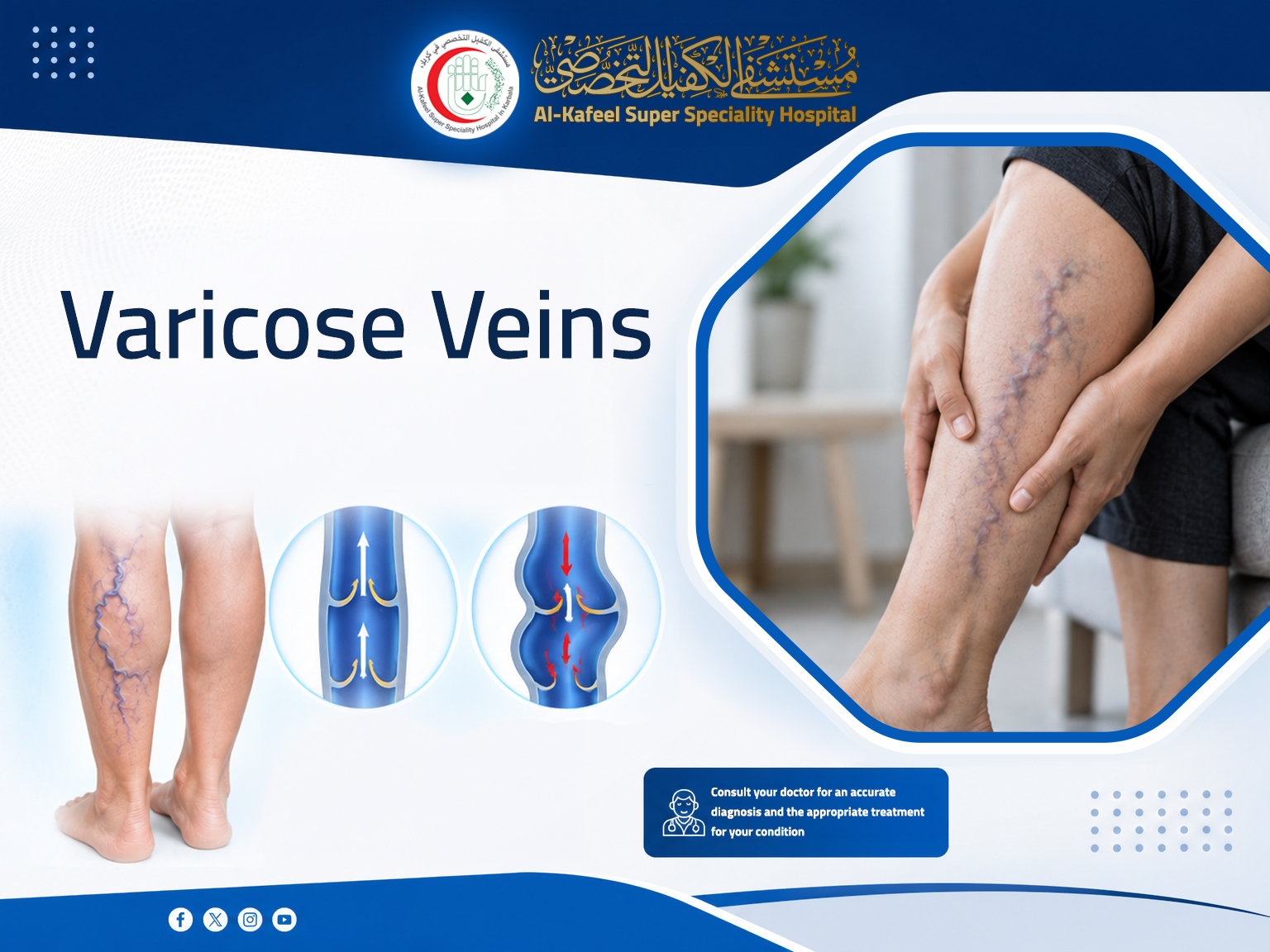
Varicose veins is a condition in which the veins become enlarged and dilated. It is possible for varicose veins to appear in all veins in the body, but they mostly affect the veins of the legs; this is because walking and prolonged standing increase the pressure on the veins of the lower part of the body.
For many people, varicose veins, which are a widespread and mild type of varicosity, are just a cosmetic problem. For others, varicose veins can cause very severe pain and discomfort, and varicose veins can sometimes lead to more severe and dangerous complications and problems, as they pose in some cases a risk of developing other diseases related to blood flow in the body.
Symptoms of Varicose Veins
Symptoms of varicose veins include veins that appear twisted and swollen as if they were cords on the legs; mostly, varicose veins do not cause any pain at all. Symptoms of varicose veins include the following:
Veins in blue or purple color.
Veins that appear twisted and swollen, as if they were cords on the legs.
Varicose veins may appear in different places on the legs,
from the thigh to the ankle, and with the appearance of painful signs and
symptoms, they may include the following:
· A feeling of pain or heaviness in the legs.
· Burning, throbbing, muscle cramping, and swelling in the lower legs.
· Increased pain after sitting or standing for long periods.
· Itching around one or more veins.
Skin ulcers near the ankle, which can indicate the presence of a serious disease in the blood vessels requiring medical treatment.
Spider veins are a condition similar to varicose veins but they are smaller, being closer to the skin, and are usually red or blue. They usually appear on the legs but may also appear on the face, and they appear in different sizes in different people and often look like a spider's web.
Causes and Risk Factors of Varicose Veins
The risk of developing varicose veins increases with age, as arteries carry blood from the heart to other various tissues in the body, while veins return blood from different parts of the body to the heart. In order to return the blood to the heart, the leg veins must work against gravity and gravitational pull.
Contractions in the lower leg muscles act like pumps, and the flexible walls in the veins help blood return to the heart. Small valves in the veins open when blood flows toward the heart and then close to prevent blood from flowing backward.
Common causes of varicose veins
These include the following:
1. Age
As a person ages, veins lose their elasticity, causing them to stretch. The valves in the veins may become weaker, allowing blood that should flow to the heart to flow backward. Thus, blood pools in the veins, leading to their widening and the formation of varicose veins. Varicose veins appear blue because they contain blood that lacks oxygen.
2. Pregnancy
Varicose veins form in some pregnant women, as pregnancy increases the volume of blood in the body but decreases its flow from the legs to the pelvis. This change in blood circulation aims to support the fetus, but it may nevertheless cause an unfortunate side effect represented in the widening of the leg veins.
Varicose veins may appear for the first time or may worsen later in pregnancy when the uterus exerts greater pressure on the leg veins, and the hormonal changes occurring during pregnancy may also play a role in this. Varicose veins that appear during pregnancy usually improve without the need for any medical treatment within three months after birth.
Factors that increase the risk of developing Varicose Veins
These include the following:
1. Age: Varicose veins often appear between the ages of 30 - 70 years, and the risk of developing them increases with age, as aging causes wear and tear on the valves in the veins that help regulate blood flow. Eventually, the wear of the valves leads to blood being able to flow backward into the veins, where it pools instead of flowing to the heart.
2. Gender: Women are more susceptible to developing varicose veins than men, and hormonal changes during pregnancy, in the premenstrual period, and during menopause can act as triggering factors for this. Female hormones tend to cause relaxation in the vein walls, and taking hormone replacement therapy or birth control pills may increase the risk of varicose veins forming.
3. Genetic factors: The probability of developing varicose veins increases in those whose relatives suffer from them.
4. Obesity: Excess weight puts additional pressure on the veins.
5. Standing for long periods: Blood flow is less efficient when staying in the same position for a long time.
Complications of Varicose Veins
Complications of varicose veins are rare, but can include: ulcers, and blood clots.
Diagnosis of Varicose Veins
To diagnose varicose veins, the doctor conducts a physical examination that also includes observing the legs while standing to note if there is any swelling, and the doctor may sometimes also ask for a description of the nature of the pain in the legs.
In some cases, there may be a need to perform an ultrasound examination, through which it can be checked whether the valves in the veins are working normally, or if there is any evidence of clotting. When performing this examination, it is done through the following steps:
One must lie on the bed.
A small amount of warm gel is applied to the skin; with the help of the gel, the formation of air pockets between the transducer and the patient's body is prevented.
A skilled technician in the field of ultrasound places a small handheld device called a transducer on the area undergoing examination, and moves from one area to another if necessary.
The transducer transmits the image of the veins in the legs to a screen that the technician and the doctor can view.
Treatment of Varicose Veins
Treatment of varicose veins may be limited to self-care methods and means, or it may require procedures performed by the doctor to close or remove the veins; treatments include the following:
1. Exercising
Exercising can relieve pain and prevent the worsening of varicose veins; fortunately, treating varicose veins does not usually require hospitalization or spending a long and uncomfortable recovery period.
2. Self-care
Self-care can relieve pain and prevent the worsening of varicose veins, and includes:
Losing weight.
· Avoiding wearing tight clothes.
· Elevating the legs.
Avoiding standing or sitting for long periods.
3. Using compression stockings
Wearing compression stockings often constitutes the first step before any other treatment. These stockings are worn all day so that they are wrapped around the leg and form pressure on it, which helps push blood in the veins and muscles in the legs more efficiently.
The degree of compression varies depending on the type of stockings and the brand. There are stockings in different colors and with different degrees of compression, and in the markets, there are many types of compression stockings, so everyone can find stockings that are comfortable and suitable for them.
When purchasing compression stockings, it must be ensured that they fit the leg; the patient or the pharmacist can measure the leg with a measuring tape to ensure buying stockings of the correct size. Compression stockings should be strong, but not tight and constricting. Those who suffer from weakness in the hands or arthritis might find difficulty wearing such stockings; on the other hand, there are special devices that help in wearing stockings.
4. Other treatments
If self-care and compression stockings did not help treat
varicose veins or if the condition is more serious, your doctor may recommend
one of the following treatments:
· Sclerotherapy.
· Laser surgery.
· Catheter-assisted surgery.
· Vein stripping (hiding veins).
· Prevention of Varicose Veins
There is no way to completely prevent varicose veins. However, improving blood circulation and toning muscles may reduce the risk of developing varicose veins, and home measures that help alleviate the discomfort caused by the formation of varicose veins may also help prevent their appearance. These include the following:
Exercising.
· Maintaining a healthy weight.
· Maintaining a diet rich in fiber and low in salt.
· Avoiding high-heeled shoes and tight hosiery and underwear.
· Elevating the legs.
· Changing sitting or standing positions frequently.
· Alternative Treatments
Treating varicose veins with desert chestnut seed extract, as it may be effective in cases of chronic venous insufficiency, which is a disease associated with the appearance of varicose veins, where the veins become unable to pump blood to the heart. A doctor must be consulted before using desert chestnut seed extract, medicinal herbs, or any other nutritional product.
Herbs that may help in treatment include the following:
· Witch hazel.
· Feverfew (Chrysanthemum).
· Horse chestnut.
· Butcher's broom (Wild myrtle).
· Grape seed.
· Berries.