

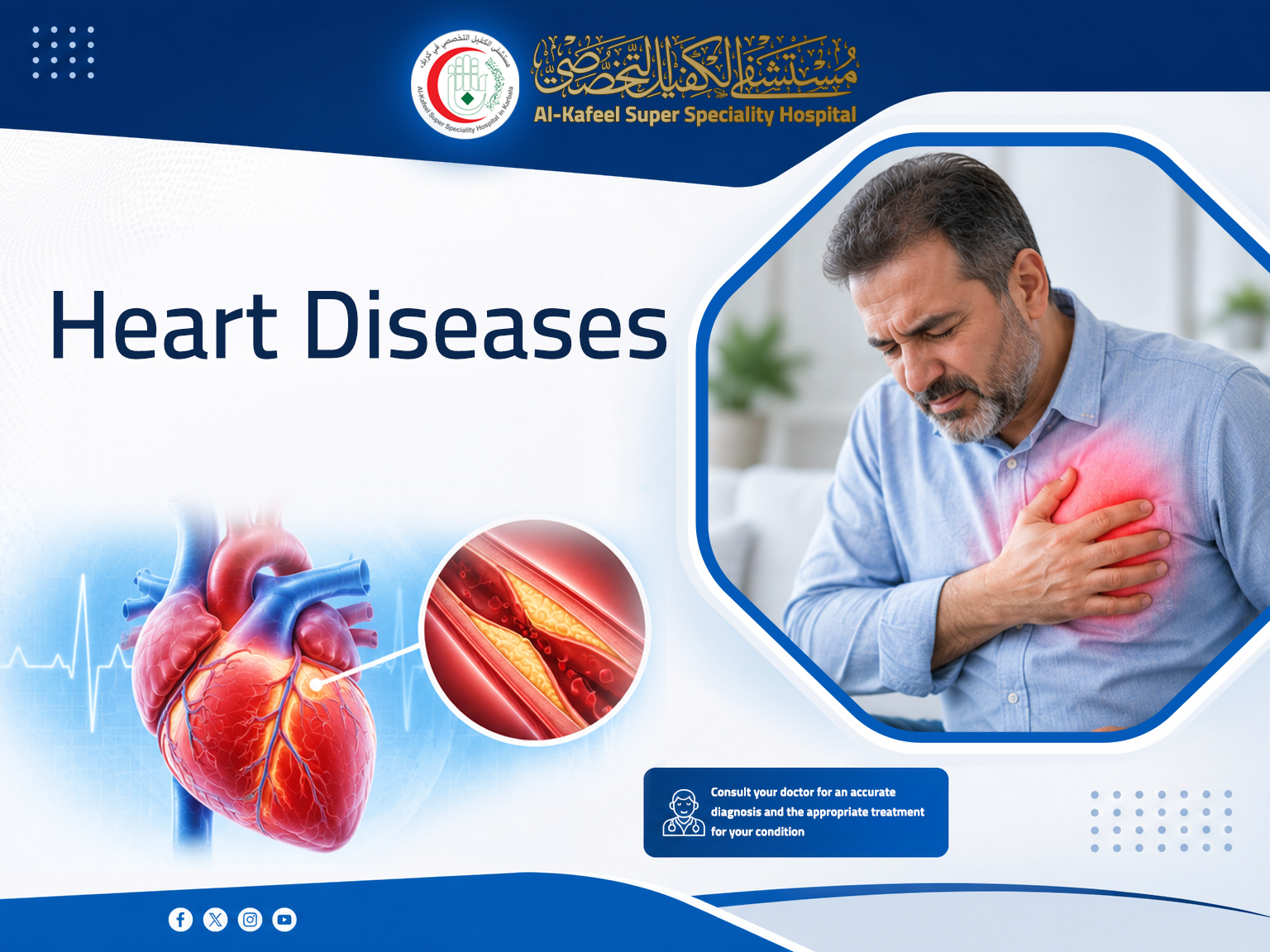
Heart diseases can affect any of the heart's functions and any of its parts, and the most common heart disease is coronary syndrome or coronary artery syndrome in its various forms.
The coronary blood vessels are the blood vessels spread on the outside of the heart muscle, and their function is to deliver blood to the heart itself.
Information about the Heart
There are four valves in the heart, each of which may suffer some damage causing a malfunction in its operation. The basic disorders in the operation of heart valves are classified into two groups:
1. Heart valve stenosis
Meaning the inability to pump blood and transport it between the different parts of the heart, which requires more pressure in pumping blood in order to reach the normal level that the heart pumps.
2. Heart valve dilation (regurgitation)
Blood flow continues even when the heart valve is supposed to completely prevent blood flow.
There is a conduction system in the heart responsible for transmitting electrical signals that stimulate the heart's contractions, organize the timing of the contraction, and organize the relationship between the ventricles' contractions and the atria's contractions.
Sometimes a malfunction may occur in the electrical conduction system, which can be reflected in: a rapid heart rate, a slow heart rate, an irregular heart rate, or the absence of any clear temporal relationship between the timing of the ventricles' contractions and the timing of the atria's contractions.
Heart diseases in the heart valves may be congenital, and then heart murmurs are expected to be heard when listening to the heart's sound; or they may be acquired as a result of various infectious heart diseases that cause direct or indirect damage to the heart valves.
Likewise, the process of arteriosclerosis can also cause damage to the heart valves. When there is a suspicion of a specific type of heart disease, one must consult a family doctor or an internal medicine specialist, and sometimes, depending on various data, it may also be necessary to consult a cardiologist.
The Mechanism of the Heart's Action
Understanding how and by what mechanism the heart works makes it easier to understand the causes of heart diseases. The heart is a pump and a muscular organ the size of a fist, located slightly to the left of the center of the chest.
The heart is divided into the right and left sides; the purpose of this division is to ensure that oxygen-rich blood does not mix with oxygen-poor blood. Oxygen-poor blood is blue in color and returns to the heart after flowing through the body.
The right side of the heart consists of the right atrium and the right ventricle, as it receives blood from the lungs and pumps it to them via the pulmonary arteries. The lungs refresh and renew the blood with new oxygen, so its color changes as a result and becomes red.
The oxygen-rich blood crosses from the right side to the left side of the heart, which also consists of the left atrium and the left ventricle, and from there, i.e., from the left side, blood is pumped to the body via the aorta to supply the body's various tissues with oxygen and different nutrients.
The four valves in the heart are responsible for the proper flow of blood. The valves open only in one direction and only when pressed, as each valve opens and closes once with every single heartbeat, or about once every second during rest.
There is also a network of electrical wires in the heart responsible for keeping the heart beating. The electrical impulses start from the top in the right atrium, then travel in a special path to the ventricles, carrying the orders to draw blood.
The conduction system takes the responsibility of ensuring the heart beats at a coordinated and proper rhythm so that the blood continues to flow in a circular manner. The continuous exchange between oxygen-rich blood and oxygen-poor blood is the process that preserves the continuity of life.
The heart muscle may be affected by an inflammatory disease due to an infectious heart disease caused by viruses, due to reactions involving the immune system, or due to alcohol consumption and drug abuse.
When do heart diseases occur?
When there is a process of hardening and the accumulation of a mixed layer of calcium and fat inside the coronary blood vessels, or when a spasm occurs in these blood vessels, a narrowing in their cavity is likely to occur, which impedes the delivery of blood to the heart muscle.
Any compromise to the heart muscle or its ability to contract can cause a temporary or permanent decline in the heart's ability to contract.
When the heart's ability to contract is damaged, there is a decline in pumping blood to vital organs in the body. This process of narrowing the blood vessels causes angina pectoris, and if permanent damage occurs to the heart muscle, then a myocardial infarction (heart attack) is generated.
Whoever suffers from angina pectoris or a myocardial infarction may feel pain or pressure on the chest wall, sometimes accompanied by sweating, a feeling of suffocation, shortness of breath, nausea, and a feeling of general, total weakness. This situation constitutes an emergency that requires urgent medical intervention.
Symptoms of Heart Diseases
Symptoms of heart diseases vary depending on the disease, and they are as follows:
1. Symptoms of Cardiovascular Diseases
Cardiovascular diseases result from the narrowing, blockage, or hardening of blood vessels, leading to the heart, brain, or other organs in the body not receiving a sufficient amount of blood. Symptoms of cardiovascular diseases include the following:
Pain in the chest.
Shortness of breath.
Numbness, weakness, or a feeling of coldness in the legs and arms.
2. Symptoms of Heart Diseases Caused by Arrhythmias
An arrhythmia is an irregular heartbeat, which may include the heart beating at a higher than normal rate, a lower than normal rate, or irregularly. Symptoms of heart diseases associated with heart rhythm include the following:
· Fluttering in the chest.
· Rapid heartbeat.
· Slow heartbeat.
· Pain in the chest.
· Shortness of breath.
· Dizziness.
Fainting or a near-fainting state.
3. Symptoms of Heart Diseases Caused by a Heart Defect
A severe congenital heart defect can usually be discovered within hours, days, weeks, or months after birth, and symptoms of these heart diseases include the following:
Skin with a light gray or blue color.
Swelling in the abdomen, legs, or around the eyes.
Shortness of breath during eating, which causes an insufficient weight gain.
Less severe and less dangerous congenital defects are often diagnosed only late in childhood or even in adulthood, and symptoms of congenital heart defects that do not pose an immediate threat to life include the following:
Easily becoming short of breath as a result of engaging in physical or athletic activity.
Easily feeling tired as a result of engaging in physical or athletic activity.
Accumulation of fluids in the heart or lungs.
Swelling in the hands, ankles, or feet.
4. Symptoms of Heart Diseases Caused by Cardiomyopathy
Cardiomyopathy means that the heart muscle becomes thicker and stiffer. Sometimes, in the early stages of cardiomyopathy, no symptoms appear at all. As the disease intensifies and worsens, symptoms may include the following:
Shortness of breath when making any effort or even during rest.
Swelling of the legs, ankles, and feet.
Swelling in the abdomen due to fluid accumulation.
· Fatigue.
· Arrhythmia.
· Dizziness and fainting.
5. Symptoms of Heart Diseases Caused by Inflammation
There are three types of inflammation in the heart:
Pericarditis: which is the inflammation of the membrane that covers the heart.
Myocarditis: which affects the middle layer of the heart muscle.
Endocarditis: which affects the inner membrane that separates the heart chambers and its valves.
Symptoms of heart diseases caused by inflammation in the
heart vary depending on the type and cause of the inflammation, and they
include:
Fever.
· Shortness of breath.
· Weakness or fatigue.
· Swelling in the legs or abdomen.
· Changes in the heart rate.
· A dry or continuous cough.
· A skin rash or unusual spots.
6. Symptoms of Heart Diseases Caused by a Problem in the Heart Valves
The heart has four valves:
· The aortic valve.
· The mitral valve.
· The pulmonary valve.
· The tricuspid valve.
All heart valves open and close to direct the flow of blood through the heart. Heart valves may be damaged as a result of several factors leading to stenosis, leaking (any abnormal flow or insufficiency), or incomplete closure. Symptoms of heart diseases caused by damage to heart valves vary depending on the affected heart valve and include:
Fatigue.
Shortness of breath.
Arrhythmia or hearing heart murmurs.
Swelling in the feet or ankles.
Pain in the chest.
Fainting.
Causes and Risk Factors of Heart Diseases
The following is an explanation of the causes and risk factors of developing heart diseases:
1. Risk Factors for Developing Heart Diseases
Risk factors that lead to heart diseases include:
· Smoking.
· Poor nutrition.
· Hypertension (High blood pressure).
· Hypercholesterolemia (High blood cholesterol).
· Diabetes.
· Obesity.
· Lack of physical activity.
· Continuous stress.
· Poor hygiene.
2. Causes of Cardiovascular Diseases
The term cardiovascular diseases refers to several types of heart and blood vessel diseases, and this name is also frequently given to the damage inflicted on the heart or blood vessels as a result of arteriosclerosis or the accumulation of layers of fat inside the arteries.
Over time, very high pressure on the arteries can make their walls stiffer, less flexible, and thicker, which may sometimes lead to obstructing the blood flow to the body's various organs and tissues.
This process is called calcification of the arteries or arteriosclerosis (atherosclerosis), which is the most widespread type of this disorder, and it is the most common factor for the appearance of risks and causes of cardiovascular diseases.
As for the factors causing this disorder, they are: an unhealthy diet, a lack of physical activity, obesity, and smoking.
3. Causes of Arrhythmia
Common causes of arrhythmia or diseases that may lead to arrhythmia include:
· Congenital heart defects.
· Coronary artery disease.
· High blood pressure.
· Diabetes.
· Smoking.
· Excessive intake of alcohol and caffeine.
· Drug addiction.
· Stress.
Some over-the-counter medications, certain prescription medications, or some dietary supplements and therapeutic herbs.
Disease in the heart valves.
4. Causes of Cardiac Defects and Malformations
Cardiac defects and malformations usually arise and develop when the fetus is in the womb. About a month after the start of pregnancy, the fetus's heart begins to grow, and at this point, heart malformations can begin to arise and form. Researchers do not know for sure the exact reason that leads to the genesis of congenital defects, but they believe that some diseases, some medications, and genetic factors play a role in this.
5. Causes of Heart Diseases and Cardiomyopathy
The exact cause of cardiomyopathy, i.e., the dilation or enlargement of the heart muscle, is unknown. There are three types of cardiomyopathy:
· A very weak or dilated heart muscle.
· A very thick heart muscle.
· A rigid, stiff, and limited heart muscle.
· 6. Causes of Cardiac Inflammations
Inflammations in the heart, such as pericarditis, myocarditis, or endocarditis, happen when a stimulating agent such as a virus, bacteria, or a chemical substance reaches the heart muscle. The most common factors causing inflammations in the heart include:
· Bacteria.
· Viruses.
· Parasites.
· Medications that may provoke an allergic or toxic reaction.
· Other diseases.
· 7. Causes of Valvular Heart Diseases
There are many factors that increase the risks of heart diseases in the valves. Heart diseases in a heart valve can be congenital, or they may be caused by some diseases, such as:
· Rheumatic fever.
· Endocarditis.
· Diseases in the connective tissues.
· Certain medications and radiation therapies for cancer.
· Complications of Heart Diseases
One of the most common complications of heart disease symptoms is congestive heart failure. Other complications that accompany heart diseases include:
· Heart attack.
· Stroke.
· Aneurysm, which is a state of localized dilation of the blood vessel walls.
· Peripheral artery diseases.
· Sudden cardiac arrest.
· Diagnosis of Heart Diseases
The necessary tests to diagnose heart diseases depend on the type of disease the doctor suspects is present. In all cases, the doctor is likely to perform a physical examination and ask questions about the patient's medical history and their family's before deciding to conduct any other test.
Tests to diagnose heart diseases include:
· Blood tests.
· Performing an electrocardiogram (ECG).
· Monitoring the heart with a Holter monitor.
· Echocardiogram.
· Cardiac catheterization.
· Heart biopsy.
· Computed tomography (CT) scan.
· Magnetic resonance imaging (MRI).
If the results of the echocardiogram are unclear, the doctor may recommend a transesophageal echocardiogram (ultrasound). To perform this test, the patient swallows a flexible tube containing a small transducer about the size of an index finger that reaches down the throat, and the transducer transmits images of the heart to a computer screen.
Treatment of Heart Diseases
Treatment options vary according to the disease, and they include the following:
1. Treatment of Cardiovascular Diseases
The goal behind treating cardiovascular diseases is often to open the narrowed or blocked arteries that are causing symptoms. The type of treatment depends on the severity of the narrowing and can include lifestyle and habit changes, certain medications, and some medical procedures or surgeries.
2. Treatment of Arrhythmias
Treating arrhythmias can include medications, medical procedures such as placing an artificial pacemaker to regulate the heartbeat, implanting a defibrillator device, surgery, and vagus nerve stimulation.
3. Treatment of Cardiac Malformations
Some cardiac defects or malformations are small and simple and do not require treatment, but there are other defects and malformations that require permanent monitoring and drug therapy, and sometimes even surgical treatment. The type of heart disease treatment depends on the type and severity of the defect and can include medications, special procedures using a catheter, open-heart surgery, and heart transplantation.
4. Treatment of Cardiomyopathy
Treatment of heart diseases and cardiomyopathy depends on the type and severity of the myopathy, and heart disease treatment includes:
· Treatment with medications.
· Medical devices.
· Heart transplant operation.
· 5. Treatment of Inflammations
The primary treatment for inflammations in the heart, such as pericarditis, myocarditis, or endocarditis, is often medications, antibiotics, and heart rate-regulating drugs. Treatments for valve-related heart disease vary depending on the type of affected valve and the degree of severity, but generally include medications, balloon surgery, and the repair or replacement of the valve.
6. Surgical Treatment
Sometimes it may be necessary to move the patient to the operating room to perform a coronary artery bypass graft operation. This surgical operation can be performed urgently as an emergency surgery, or as a previously planned surgery based on the results of various tests that necessitate surgical intervention.
Prevention of Heart Diseases
There are certain types of heart diseases, such as heart
defects, that cannot be prevented, but lifestyle changes that help improve the
condition of some patients suffering from heart diseases may also help prevent
many types of heart diseases. These changes include:
Maintaining normal levels of blood pressure, cholesterol, and blood sugar.
Quitting smoking.
Ensuring one engages in physical activity.
Ensuring a healthy diet.
Maintaining a healthy weight.
Lowering the stress level and controlling it.
Alternative Treatments
There are several methods in alternative medicine that may be useful in lowering the cholesterol percentage and preventing certain types of heart diseases, and they include:
· Blond psyllium.
· Flaxseeds.
· Oats and oat bran.
· Omega-3 fatty acids.